
The Paris label that turned technology, spectacle and experimentation into a new language for fashion has ceased operations following an unresolved dispute with its majority shareholder and distributor.
Coperni, one of the most inventive fashion labels of the last decade, has officially reached the end of its current chapter.
On November 4, 2026, co-founders Sébastien Meyer and Arnaud Vaillant announced that Coperni SAS would cease operations after months of efforts to resolve a dispute with Tomorrow Ltd., the company’s majority shareholder and exclusive distributor. The founders said that despite trying to preserve the company and find a solution, an agreement could not be reached.
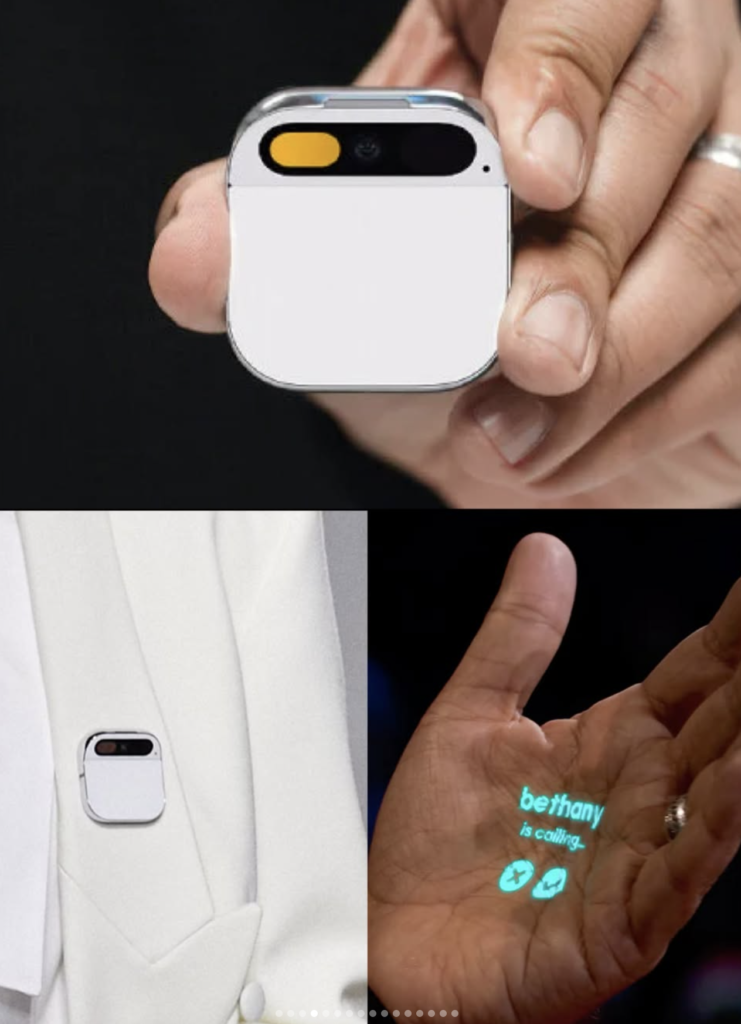
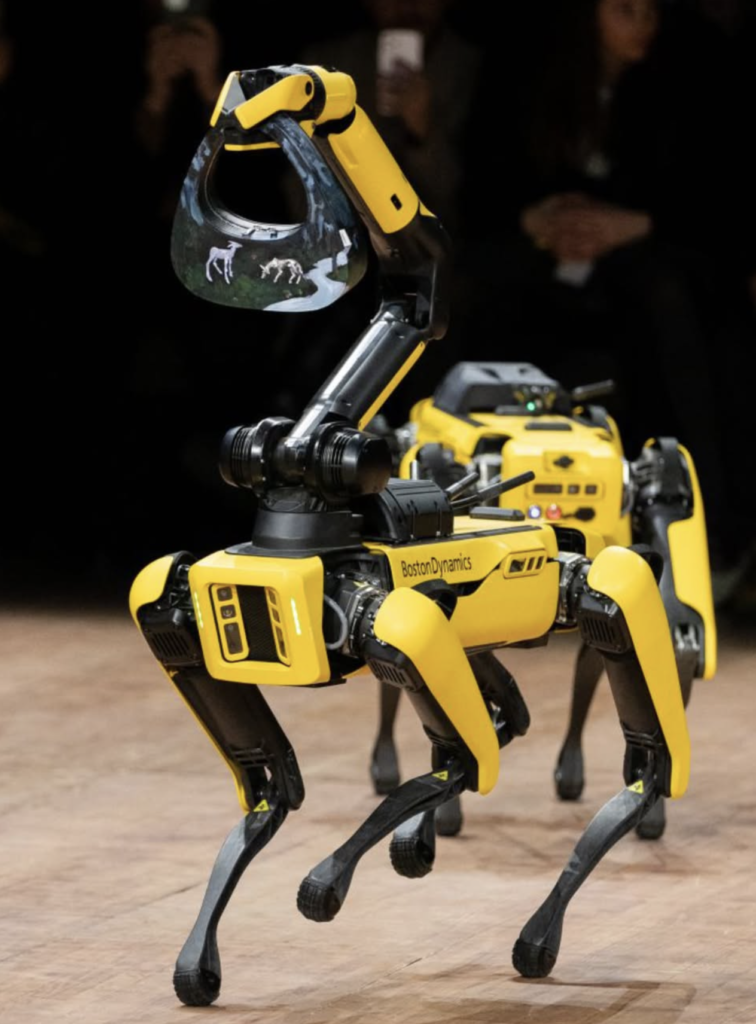
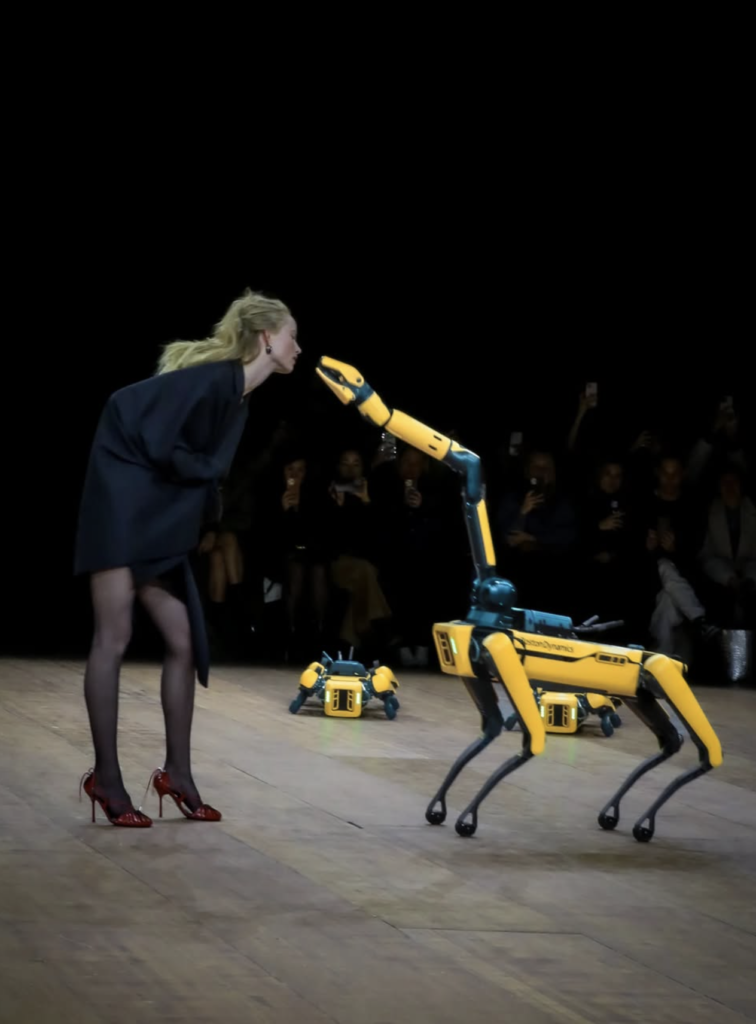
For fashion, the closure represents more than the loss of another independent label. Coperni became one of the industry’s most visible laboratories for exploring what happens when clothing, science, technology, entertainment and internet culture collide.
From Paris Start-Up to Global Fashion Name
Coperni’s history actually begins before its celebrated eight-year run.
Meyer and Vaillant met while studying at Mod’Art International in Paris and originally established Coperni Femme in 2013. The young label quickly attracted attention, winning the ANDAM First Collections Prize in 2014 and reaching the finalist stage of the 2015 LVMH Prize.
Their trajectory changed when the pair were appointed artistic directors of Courrèges in 2015, temporarily placing Coperni on hold. After leaving Courrèges, they returned to their own project, relaunching Coperni in 2018 and building the version of the brand that would become internationally recognized.
That relaunch began an extraordinary eight-year period.

The Moment That Changed Everything
Coperni understood something about modern fashion earlier than many brands: a runway show no longer existed only for the people sitting in the room.
It existed for the internet.
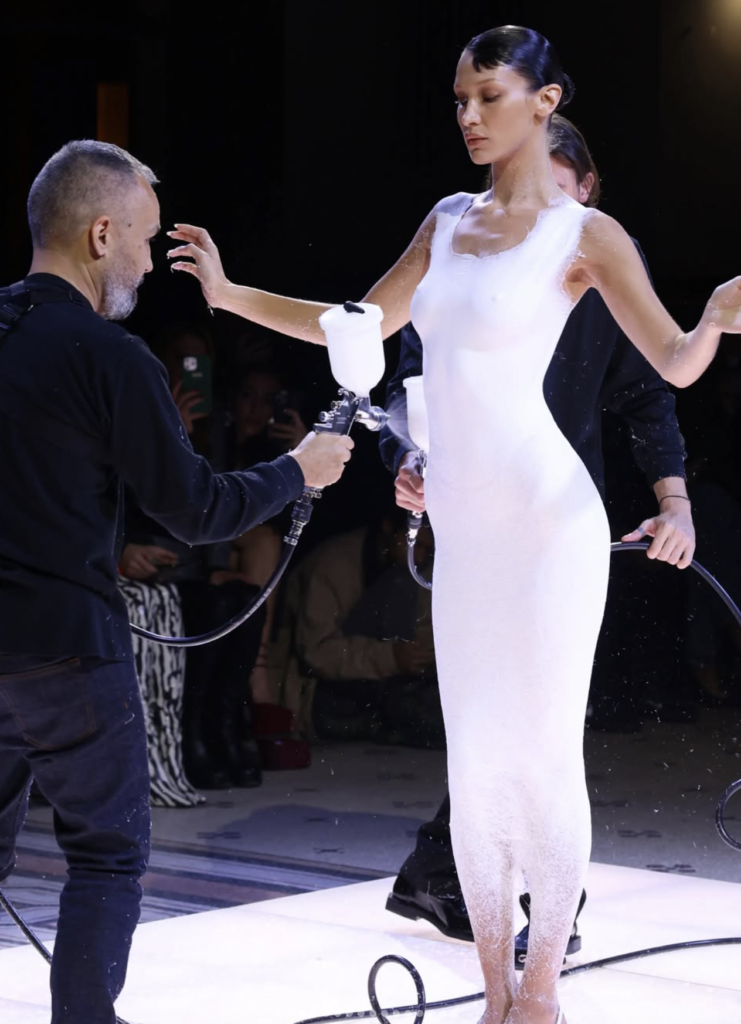
That philosophy reached its defining moment during the Spring/Summer 2023 presentation, when Bella Hadid walked onto the runway and had a white dress sprayed directly onto her body using Fabrican spray-on material.
Within hours, the performance was everywhere.
But Coperni continued experimenting rather than attempting to simply recreate the same viral formula.
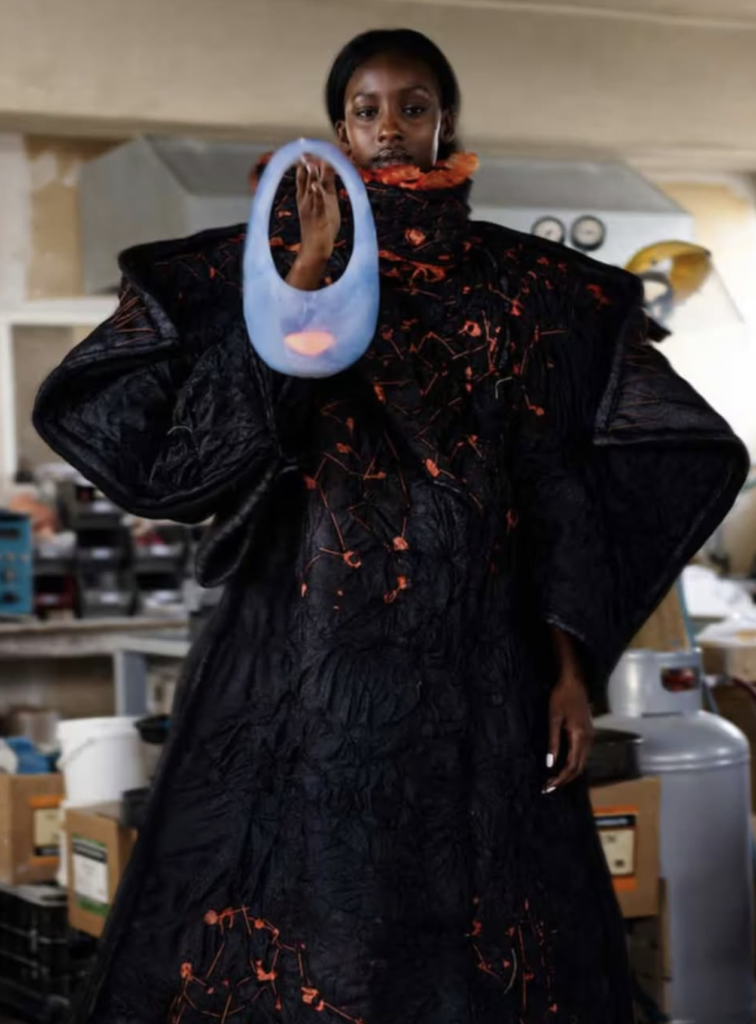
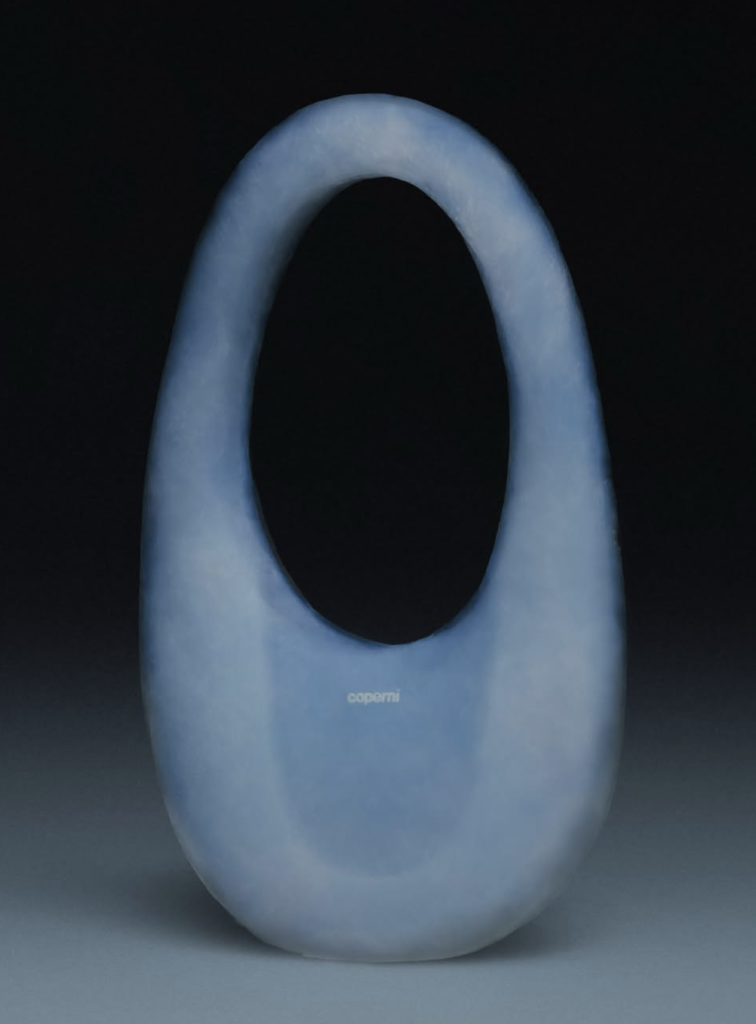
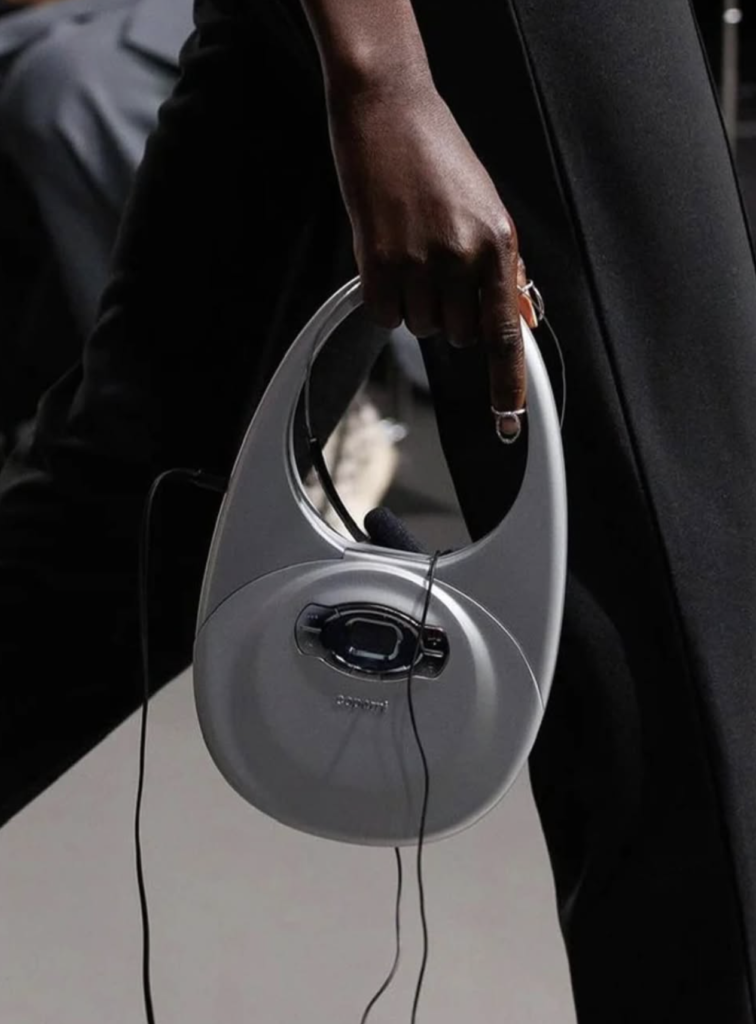
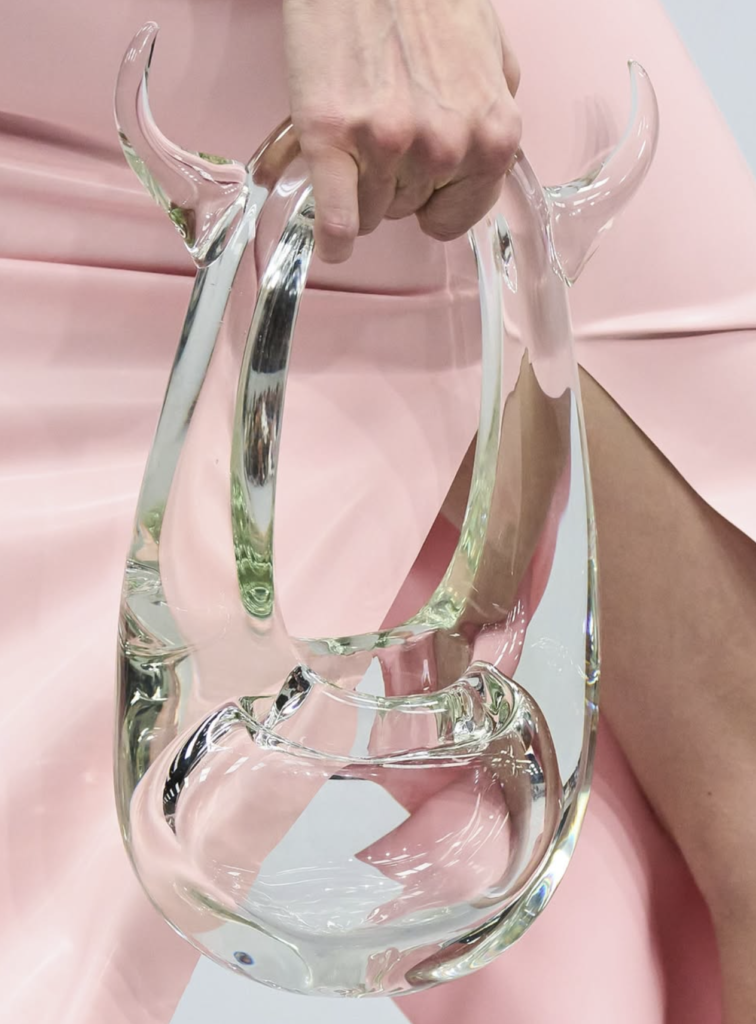
For Fall/Winter 2024, the brand introduced the Air Swipe Bag, created from silica aerogel — a material associated with NASA research and used to capture cosmic dust. The bag was approximately 99 percent air and weighed only around 33 grams, transforming Coperni’s signature Swipe silhouette into something closer to a scientific experiment than a traditional luxury accessory.
Then came increasingly ambitious runway environments.
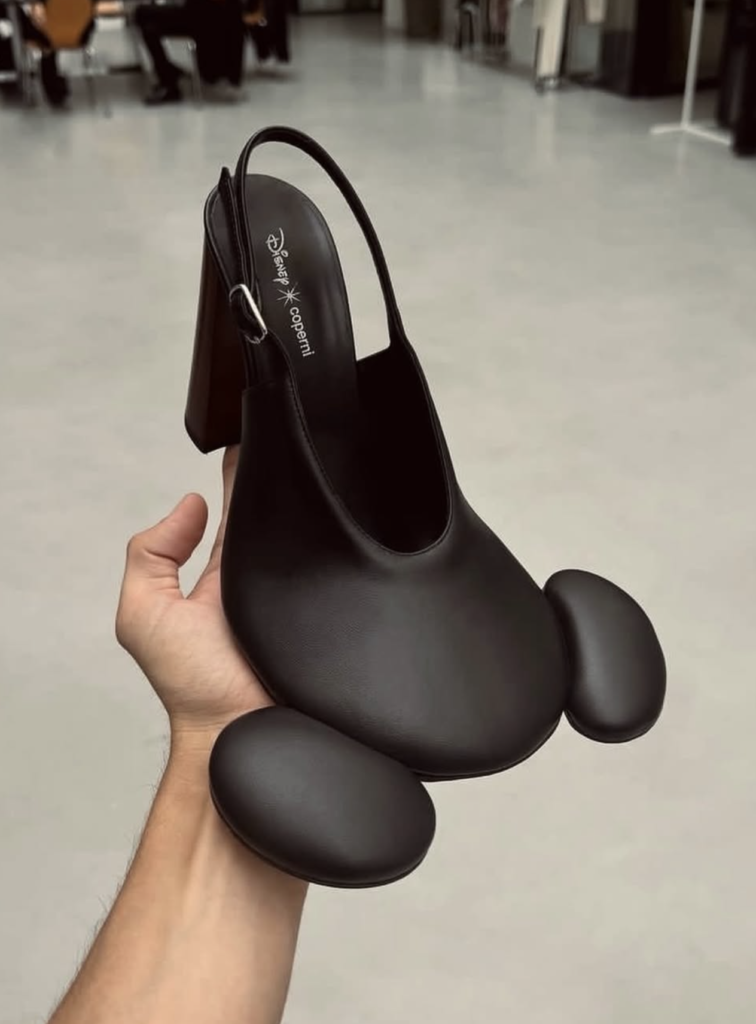
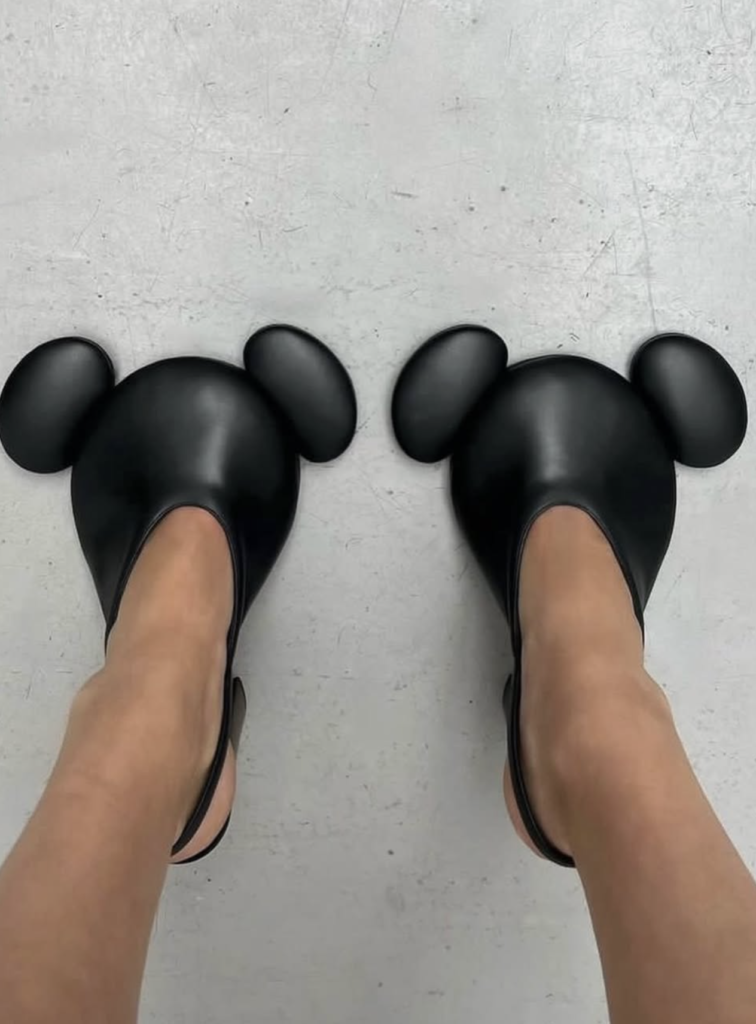
Coperni staged its Spring/Summer 2025 show at Disneyland Paris, turning the park into a fashion spectacle. For Fall/Winter 2025, the brand transformed Paris’s Adidas Arena into a massive LAN party, placing roughly 200 gamers alongside fashion guests while models moved through the space.
For Meyer and Vaillant, technology wasn’t decoration.
It was part of the design language.
What Happened to Coperni?
Behind the creative momentum, however, Coperni was facing a growing business crisis.
Tomorrow had served as the company’s majority shareholder and distribution partner. According to Coperni’s founders, the relationship deteriorated amid disputes involving payments and funding necessary to operate the business.
Coperni withdrew from Paris Fashion Week earlier in 2026 as tensions escalated. In June, a Paris commercial court placed the company under court protection while Meyer and Vaillant attempted to stabilize operations and regain control of the label.
Those efforts ultimately failed to produce a resolution.
The founders announced that Coperni SAS would cease operating, describing the previous eight years as an extraordinary journey and thanking the employees, factories, buyers, photographers, models, celebrities and supporters who helped build the company.
Their final message contained one particularly interesting phrase:
“See you soon.”
For two designers whose careers have repeatedly evolved — from Coperni to Courrèges and back again — it leaves the door open to whatever comes next.
Coperni’s Legacy
Coperni proved that experimentation could become part of a fashion house’s identity rather than an occasional marketing stunt.
A sprayed-on dress.
A handbag made almost entirely from air.
A runway inside Disneyland Paris.
A fashion show surrounded by gamers.
Each project challenged the increasingly blurred boundaries between fashion, technology, entertainment and digital culture.
The company may be closing, but the ideas Meyer and Vaillant introduced will likely continue influencing the industry long after Coperni’s final collection.
Fashion didn’t just lose a brand.
It lost one of its most interesting laboratories.
Photos By Coperni
The Moment That Changed Everything
Coperni understood something about modern fashion earlier than many brands: a runway show no longer existed only for the people sitting in the room.
It existed for the internet.
That philosophy reached its defining moment during the Spring/Summer 2023 presentation, when Bella Hadid walked onto the runway and had a white dress sprayed directly onto her body using Fabrican spray-on material.
Within hours, the performance was everywhere.
But Coperni continued experimenting rather than attempting to simply recreate the same viral formula.
For Fall/Winter 2024, the brand introduced the Air Swipe Bag, created from silica aerogel — a material associated with NASA research and used to capture cosmic dust. The bag was approximately 99 percent air and weighed only around 33 grams, transforming Coperni’s signature Swipe silhouette into something closer to a scientific experiment than a traditional luxury accessory.
Then came increasingly ambitious runway environments.
Coperni staged its Spring/Summer 2025 show at Disneyland Paris, turning the park into a fashion spectacle. For Fall/Winter 2025, the brand transformed Paris’s Adidas Arena into a massive LAN party, placing roughly 200 gamers alongside fashion guests while models moved through the space.
For Meyer and Vaillant, technology wasn’t decoration.
It was part of the design language.
What Happened to Coperni?
Behind the creative momentum, however, Coperni was facing a growing business crisis.
Tomorrow had served as the company’s majority shareholder and distribution partner. According to Coperni’s founders, the relationship deteriorated amid disputes involving payments and funding necessary to operate the business.
Coperni withdrew from Paris Fashion Week earlier in 2026 as tensions escalated. In June, a Paris commercial court placed the company under court protection while Meyer and Vaillant attempted to stabilize operations and regain control of the label.
Those efforts ultimately failed to produce a resolution.
The founders announced that Coperni SAS would cease operating, describing the previous eight years as an extraordinary journey and thanking the employees, factories, buyers, photographers, models, celebrities and supporters who helped build the company.
Their final message contained one particularly interesting phrase:
“See you soon.”
For two designers whose careers have repeatedly evolved — from Coperni to Courrèges and back again — it leaves the door open to whatever comes next.
Coperni’s Legacy
Coperni proved that experimentation could become part of a fashion house’s identity rather than an occasional marketing stunt.
A sprayed-on dress.
A handbag made almost entirely from air.
A runway inside Disneyland Paris.
A fashion show surrounded by gamers.
Each project challenged the increasingly blurred boundaries between fashion, technology, entertainment and digital culture.
The company may be closing, but the ideas Meyer and Vaillant introduced will likely continue influencing the industry long after Coperni’s final collection.
Fashion didn’t just lose a brand.
It lost one of its most interesting laboratories.