
From Texas to Paris, Daniel Roseberry has transformed one of fashion’s most historic couture houses into one of its most talked-about names.
There are designers who inherit famous fashion houses. Then there are designers who fundamentally change the way a new generation sees them.
Daniel Roseberry belongs in the second category.
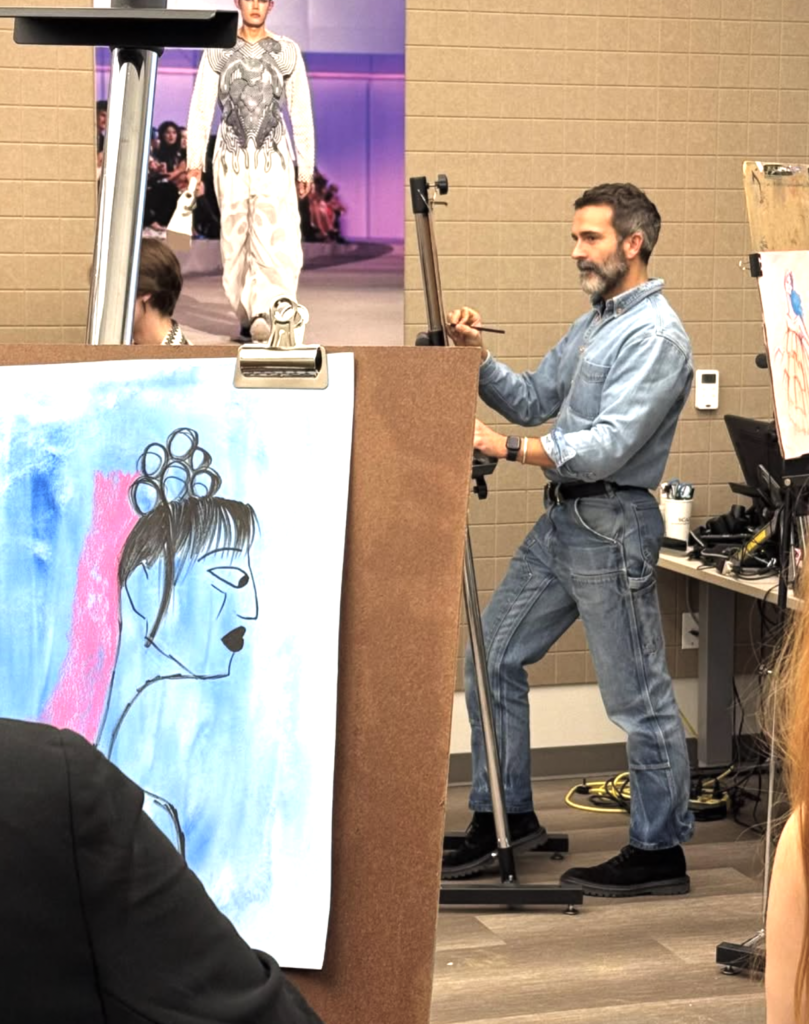
Born in Plano, Texas, in 1985, Roseberry followed an unconventional road to the highest levels of Paris couture. Raised by a priest father and artist mother in a deeply religious family, he once considered entering the ministry and participated in Christian missions before eventually heading to New York and enrolling at the Fashion Institute of Technology.
He never finished.
After two years at FIT, Roseberry left school for an opportunity at Thom Browne. What could have been viewed as a risky decision became the foundation of his career. Roseberry spent roughly a decade at the company, eventually becoming head of design and working across its men’s and women’s collections.
Then Paris called.
TAKING OVER SCHIAPARELLI
In April 2019, Roseberry was named creative director of Maison Schiaparelli, the legendary Paris couture house founded by Elsa Schiaparelli.
It was a formidable assignment.
Elsa Schiaparelli wasn’t simply a dressmaker. Her collaborations and friendships with artists including Salvador Dalí helped establish a fashion vocabulary built around Surrealism, humor, illusion and provocation. The house had reopened at 21 Place Vendôme in 2012 and regained official haute couture status in 2017, but translating such a famous historical legacy into a modern cultural force remained the challenge.
Roseberry’s answer was not to imitate Elsa.
He began constructing his own Schiaparelli universe.
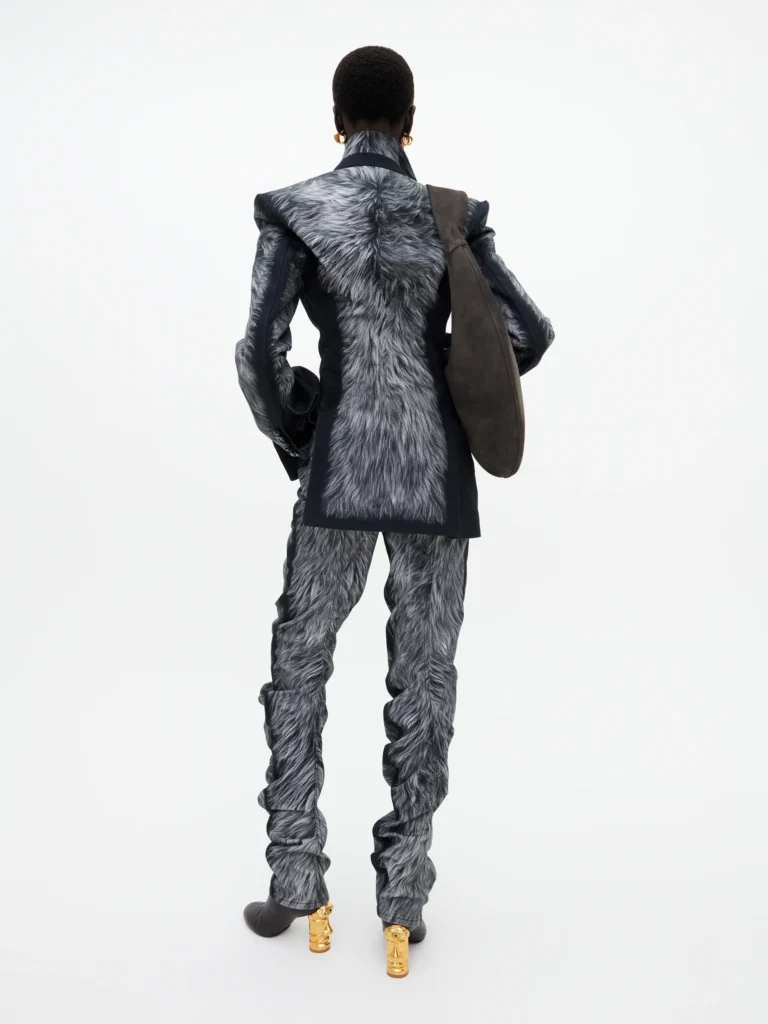
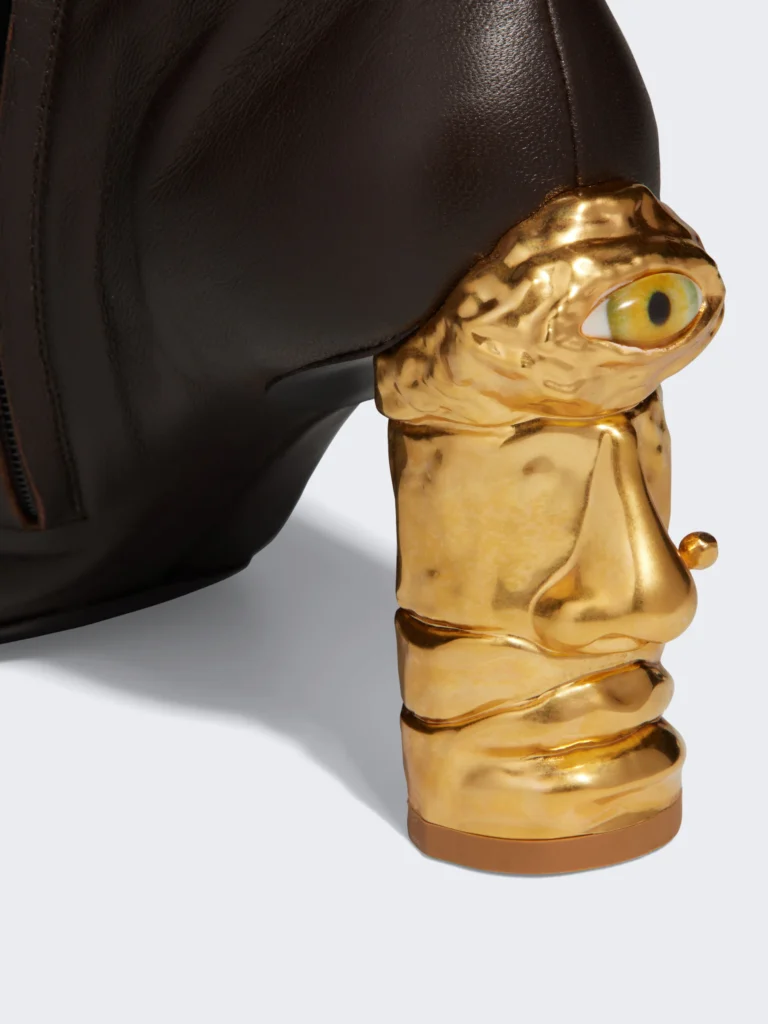
Gold anatomical jewelry. Sculpted torsos. Breastplates. Oversized jewelry. Trompe-l’œil details. Extreme silhouettes. Denim pushed into couture territory. Faces, eyes, ears and other parts of the human body transformed into accessories and embellishments.
The imagery was strange, glamorous and immediately recognizable.
And, critically, it photographed extraordinarily well.
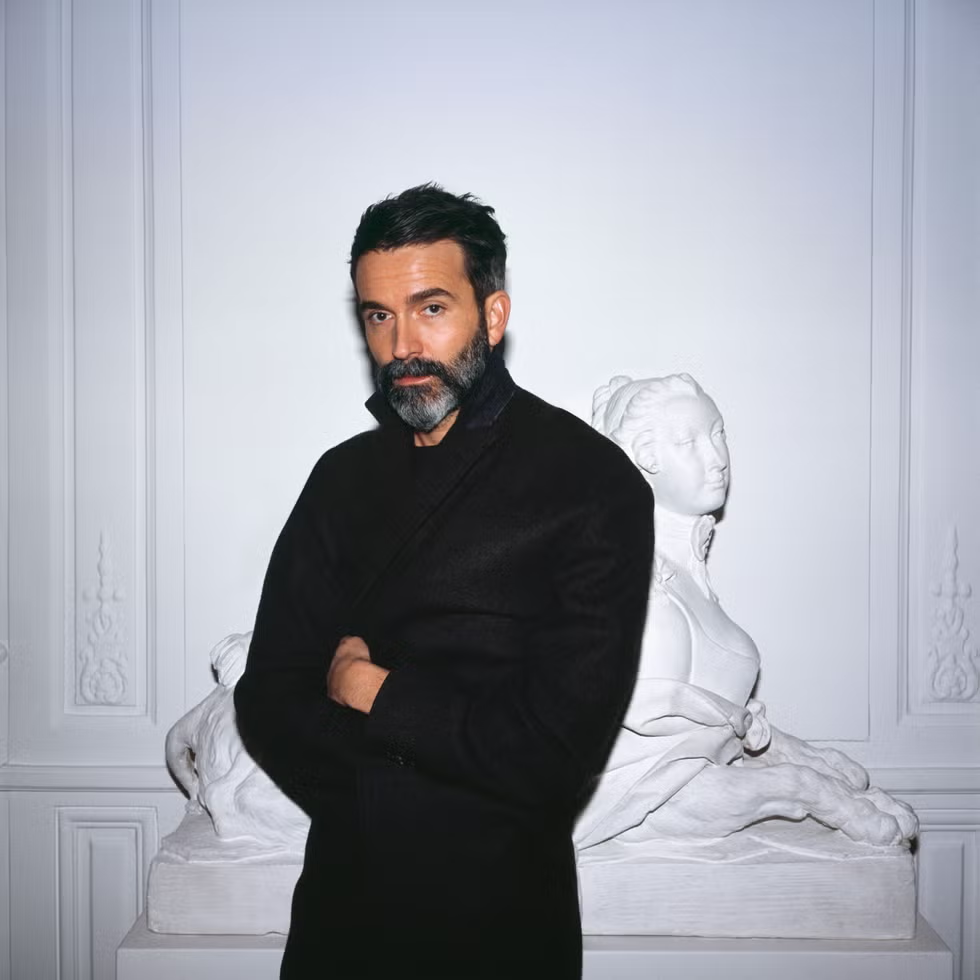
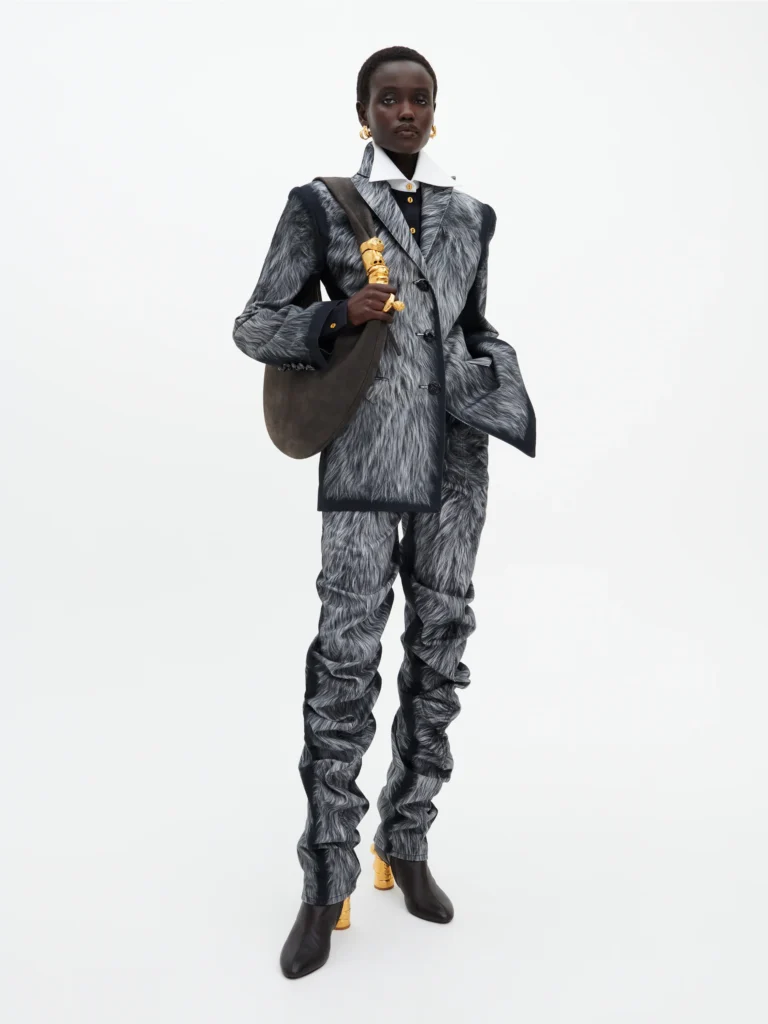
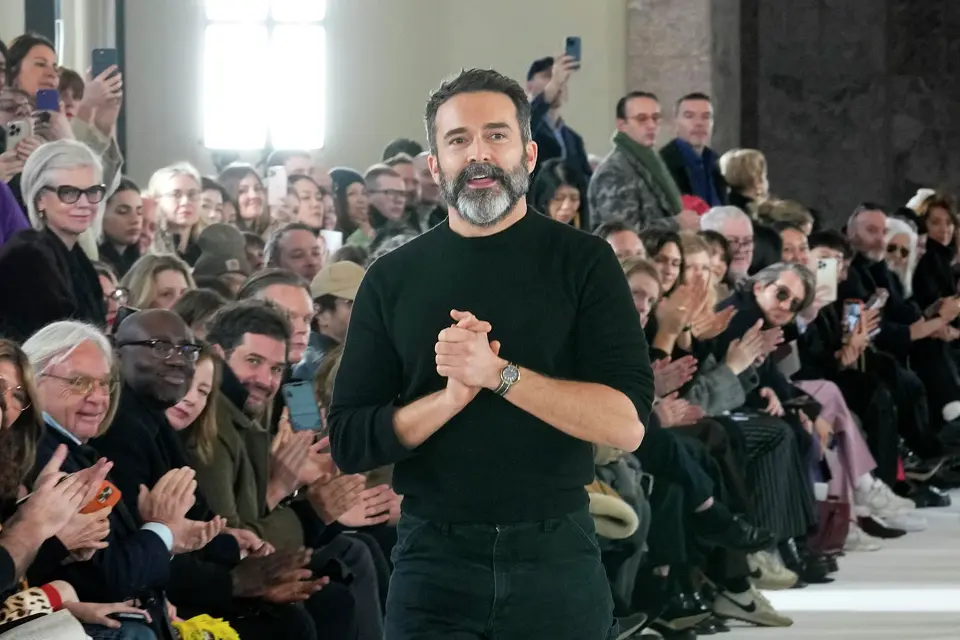
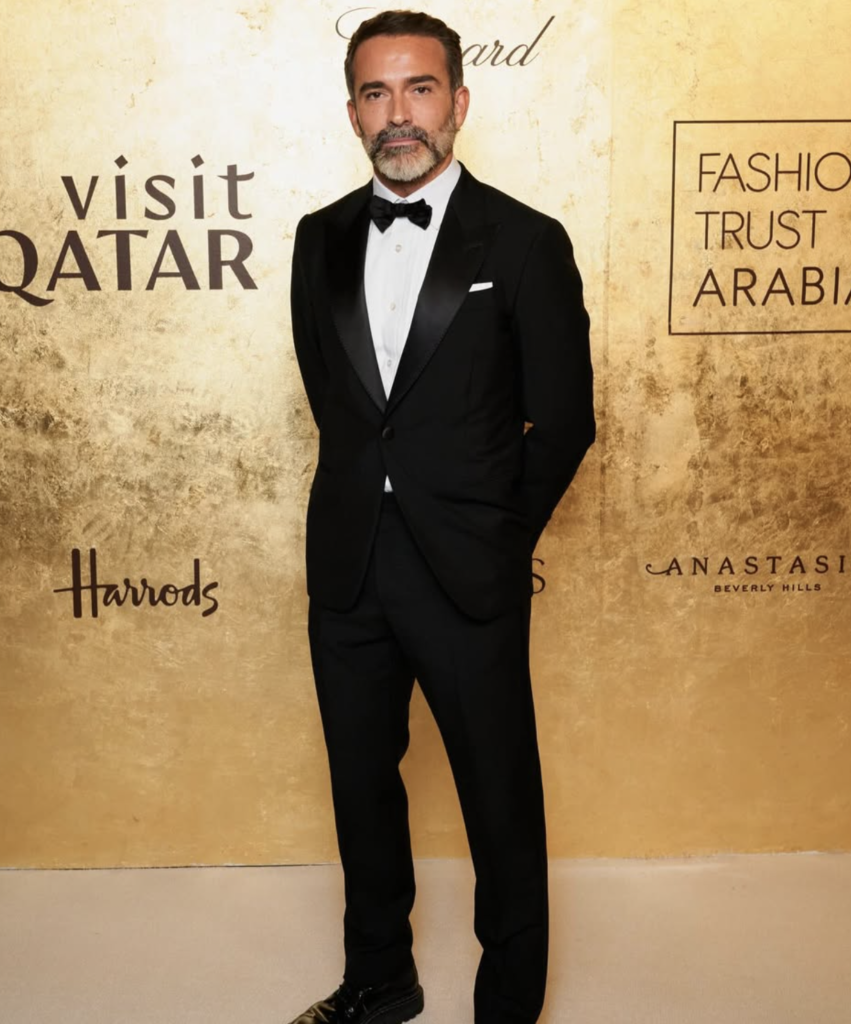
WHEN COUTURE BECAME POP CULTURE
One of Roseberry’s defining breakthroughs arrived in January 2021.
For President Joe Biden’s inauguration, Lady Gaga performed the U.S. national anthem wearing Schiaparelli Haute Couture: a fitted navy jacket, sweeping red skirt and enormous gold dove brooch carrying an olive branch.
It became one of the most widely circulated fashion images of the inauguration and placed Roseberry’s Schiaparelli before an audience far beyond traditional couture clients.
More cultural moments followed.
Bella Hadid appeared at Cannes in a black Schiaparelli gown dominated by a gold anatomical breastplate resembling human lungs. Kylie Jenner created headlines in the house’s hyperrealistic faux lion-head couture. At the 2023 Met Gala, Michaela Coel wore a Roseberry design covered with roughly 130,000 crystals that Vogue reported required almost 4,000 hours of work.
Roseberry understood something particularly important about modern luxury: couture could remain extraordinarily exclusive while its imagery became globally accessible.
A handful of people may ever own these pieces. Millions can experience them.
THE ACCOLADES FOLLOWED
By 2024, Roseberry’s impact had moved beyond viral red carpets.
The Council of Fashion Designers of America named him International Designer of the Year at the 2024 CFDA Fashion Awards, recognizing his work at Schiaparelli and his influence on contemporary fashion.
In 2026, his position at the intersection of fashion and art became even more visible.
London’s Victoria and Albert Museum staged “Schiaparelli: Fashion Becomes Art,” the first UK exhibition dedicated to the house. Running from March 28 through November 15, 2026, it traced Schiaparelli from Elsa’s groundbreaking work through Roseberry’s current tenure, placing his creations within the larger historical story of the maison.
TIME also included Schiaparelli among its 10 most influential fashion and beauty companies of 2026, specifically noting the dramatic revival that has taken place under Roseberry’s creative leadership.
Then, on November 2, 2026, the Smithsonian’s Hirshhorn Museum and Sculpture Garden honored Roseberry with its Leader in the Arts Award during its New York gala at Lincoln Center.
WHY DANIEL ROSEBERRY MATTERS
Roseberry’s most significant accomplishment may not be any single dress or award.
It is relevance.
He inherited a house whose history was already secure and made people curious about what Schiaparelli would do next.
That’s considerably harder than simply mining an archive.
His work respects Elsa Schiaparelli’s fascination with Surrealism without becoming historical costume. Roseberry has instead developed recognizable codes of his own—sculptural forms, gold anatomy, exaggerated proportion, American and Western references and the deliberate collision of beauty with something slightly uncomfortable.
And the strategy is still evolving.
Schiaparelli’s Fall 2026 couture collection continued Roseberry’s experimentation with body-molded forms and fantastical construction, while his Spring 2027 ready-to-wear collection showed how the house is expanding the language beyond couture spectacle into a larger wardrobe and commercial universe.
Nearly seven years after arriving at Place Vendôme, Roseberry is no longer fashion’s unexpected American appointment in Paris.
He is one of the designers defining what contemporary couture looks like, and perhaps more importantly, he has helped make people outside couture care about it again.
Photos from Daniel Roseberry Instagram.