
An ongoing strike by independent truck drivers in the Chilean port city of San Antonio is disrupting container movements and putting pressure on one of the country’s most important export gateways just as its peak fruit-shipping season gets underway.
The protest, organized by the Agrupación de Camioneros Independientes de San Antonio, or Agreporsai, began on the night of October 28. Drivers have blocked access to several off-port container depots that form a critical part of the logistics network feeding terminals in San Antonio.
At the center of the dispute are the rising costs faced by independent transport operators.
Drivers say higher diesel prices, new and existing toll expenses and other operating costs have increased sharply while the freight rates they receive for moving containers have failed to keep pace. Chile’s diesel price has risen by more than 400 Chilean pesos per liter since late July, according to figures cited by local media from state energy company Enap.
The dispute has quickly expanded beyond a local transportation issue because of San Antonio’s importance to Chilean trade.
Thousands of containers have been caught in the disruption, while storage capacity at terminals and logistics facilities has come under increasing pressure. The timing is particularly sensitive for Chile’s agricultural sector as the country begins its annual fresh-fruit export season.
Cherry exports redirected
The effects are already reaching international shipping schedules.
At least two vessels associated with the seasonal Cherry Express service have been redirected from San Antonio to the nearby Port of Valparaíso. The specialized services transport Chilean cherries directly to China, where demand for the fruit makes the weeks ahead one of the most important periods of the year for producers and exporters.
Frutas de Chile has warned that prolonged disruption could create significant logistical and financial consequences for exporters. Nearly half of Chile’s fruit exports normally move through San Antonio, according to the industry organization.
The situation also illustrates how dependent Chile’s export economy is on coordination between trucking companies, container depots, port operators, shipping lines and agricultural producers. A disruption at one point in that network can quickly affect vessel schedules, refrigerated-container availability and the ability to move perishable goods to overseas markets.
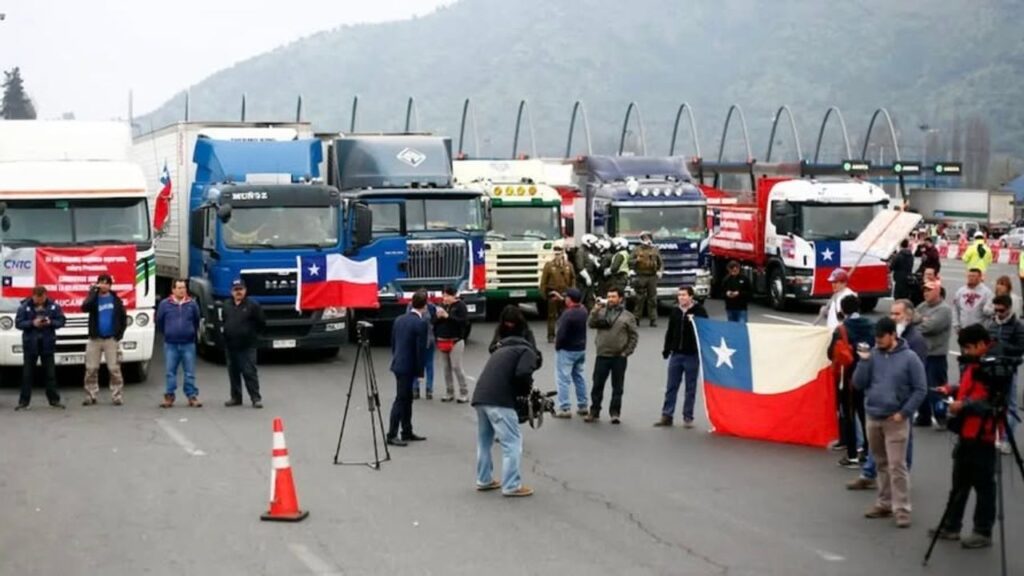
Government steps into negotiations
After several days of talks, Chilean authorities announced on November 5 that a framework had been presented to the striking truckers in an effort to resolve the dispute.
One of the key proposals would allow independent operators to negotiate directly with logistics companies rather than working through intermediaries. The framework also calls for future freight-rate adjustments to be linked to the Transport Cost Index produced by Chile’s National Statistics Institute, providing a mechanism for rates to respond to changes in expenses such as diesel.
Agreporsai president Manuel Araya welcomed progress in the negotiations but said the proposal must first be presented to the organization’s members.
A further meeting involving the drivers and government representatives was scheduled for the morning of November 6. As of early Friday, the strike had not formally been lifted.
Whether the proposed framework is enough to end the blockade will now be determined by the drivers themselves.
For Chile’s exporters, however, the clock is already running. With the fruit season accelerating and additional shipments preparing to leave for Asian markets, restoring the normal movement of containers through San Antonio has become increasingly important for the country’s wider supply chain.