
SpaceX has successfully caught a Starship spacecraft returning from orbit for the first time, marking one of the biggest milestones yet in the company’s pursuit of a fully reusable rocket.
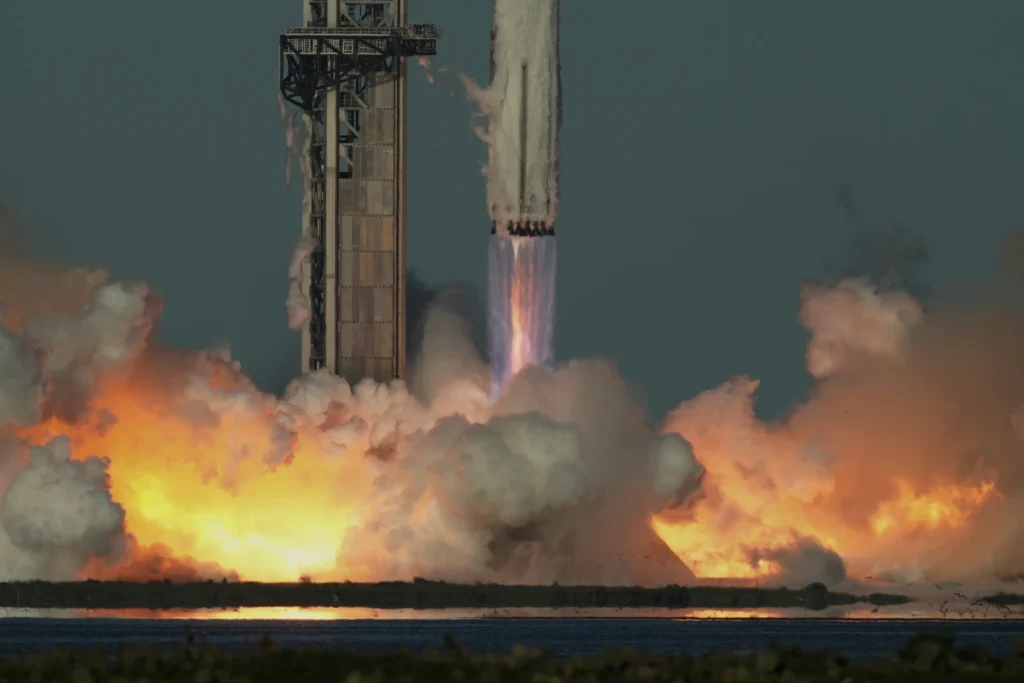
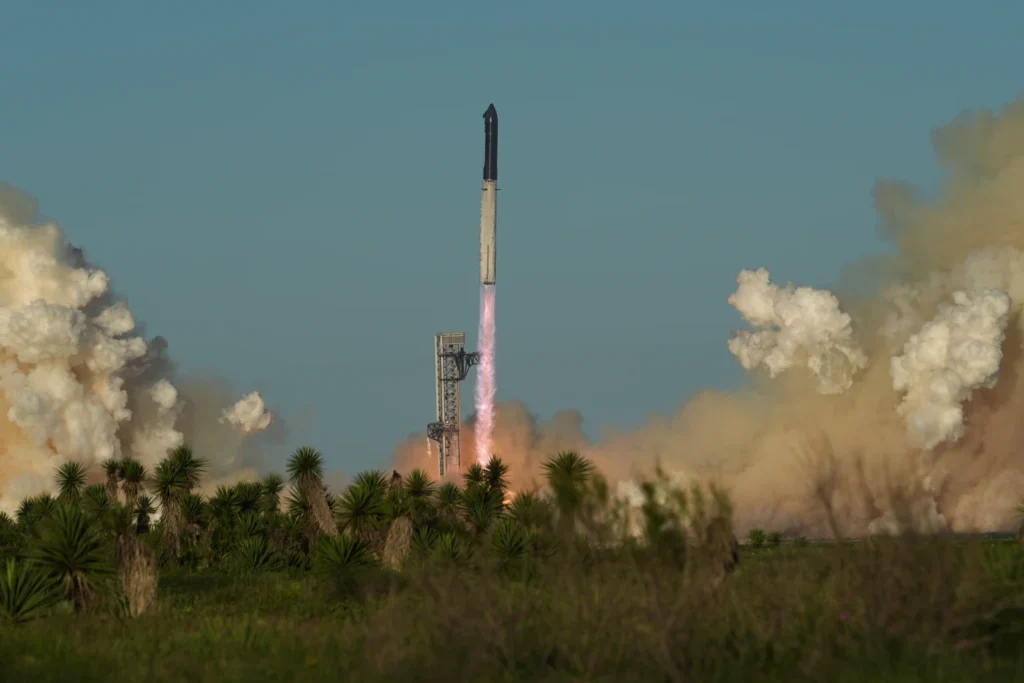
SpaceX made history on November 14 when Starship 42 returned to Starbase, Texas, and descended directly into the giant mechanical arms of its launch tower.
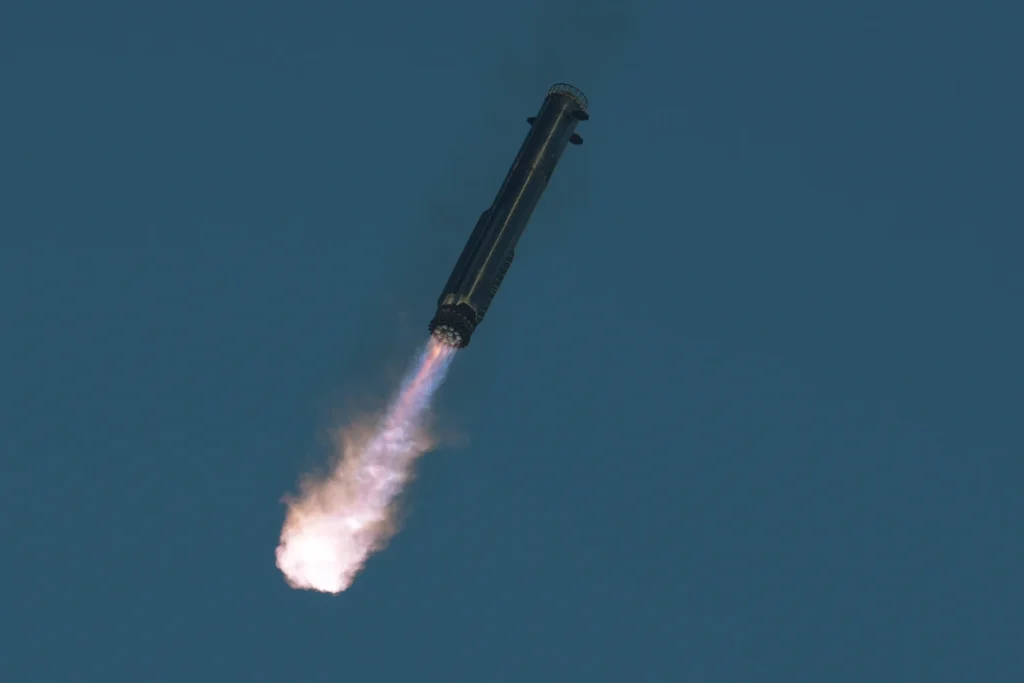
The spacecraft had launched the previous afternoon aboard SpaceX’s massive Starship system before separating from its Super Heavy booster and continuing into orbit.
Over the course of more than 22 hours, Starship completed approximately 14 orbits around Earth and deployed 26 next-generation Starlink V3 satellites.
Then came the moment SpaceX had spent years working toward.
After beginning its return through Earth’s atmosphere at orbital speeds, Starship endured an intense reentry, descended through the clouds above South Texas and reignited its engines. The spacecraft flipped vertically before slowly lowering itself between the tower’s massive mechanical arms, commonly referred to as the “chopsticks.”


The arms secured the spacecraft in midair.
It was the first successful tower catch of a Starship upper stage returning from orbit.
The scale of the system makes the achievement even more significant. The complete Starship and Super Heavy configuration stands approximately 407 feet tall, making it the largest and most powerful rocket system ever flown. The Starship upper stage caught by the tower measures approximately 171 feet tall.
SpaceX had originally planned an even more ambitious mission: catching both stages of the rocket.
The Super Heavy booster was scheduled to return to Starbase shortly after launch, but its guidance system diverted the vehicle toward the Gulf of Mexico after detecting conditions that prevented a safe tower approach. The booster was therefore not recovered.
Starship’s successful return nevertheless represents a major step toward SpaceX’s ultimate objective — making both stages of an orbital rocket rapidly reusable.
Unlike Falcon 9, which routinely recovers its first-stage booster while disposing of its upper stage, Starship is being designed so both major sections can return, be inspected and eventually fly again.
That capability could dramatically change the economics and frequency of spaceflight, supporting everything from large-scale satellite deployment to NASA’s Artemis lunar program and SpaceX’s longer-term ambitions for Mars.
For SpaceX, the catch wasn’t simply another landing.