
Designer and material researcher Ori Orisun Merhav is transforming an overlooked insect-produced resin into glowing sculpture, collectible design and a new language for biomaterials.
Shellac has existed for centuries, but Ori Orisun Merhav is asking us to see it differently.
The Brussels-based designer has built much of her practice around lac, the natural resin produced by Kerria lacca insects. Traditionally processed into shellac, the material has long appeared in furniture finishes, coatings and other industrial applications. Merhav instead treats it as a material capable of becoming architecture, sculpture and light.
Her ongoing research project, Made by Insects, began after she became fascinated by the relationship between the insects and the trees they inhabit. In 2020, Merhav travelled to Thailand to study lac production firsthand and meet communities working with the material. What followed was years of experimentation with heating, stretching, blowing and eventually 3D-printing the resin.
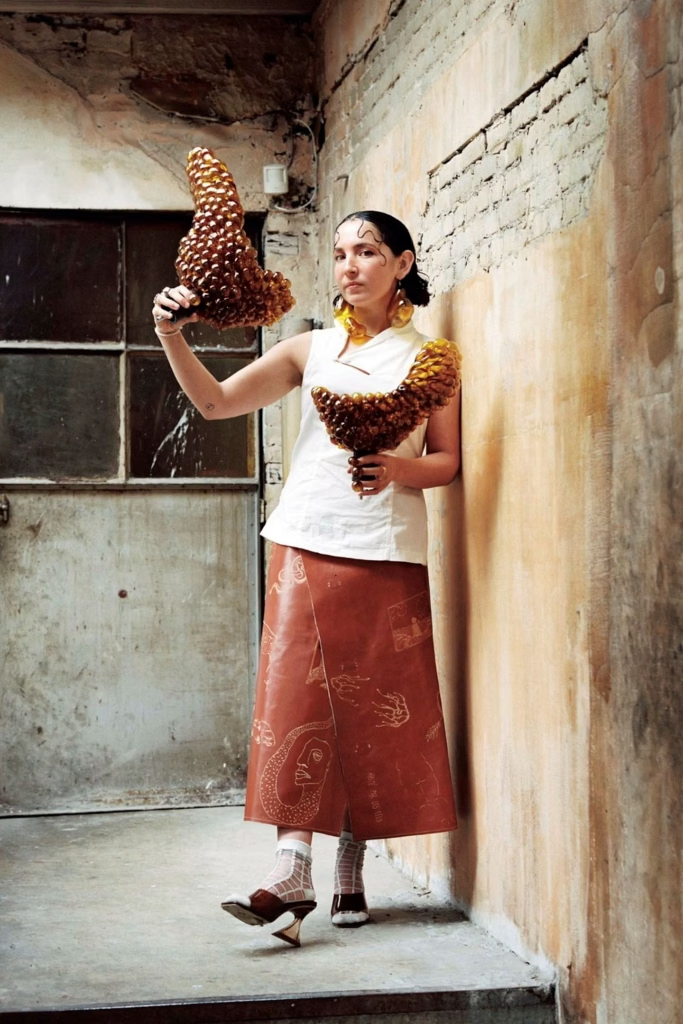
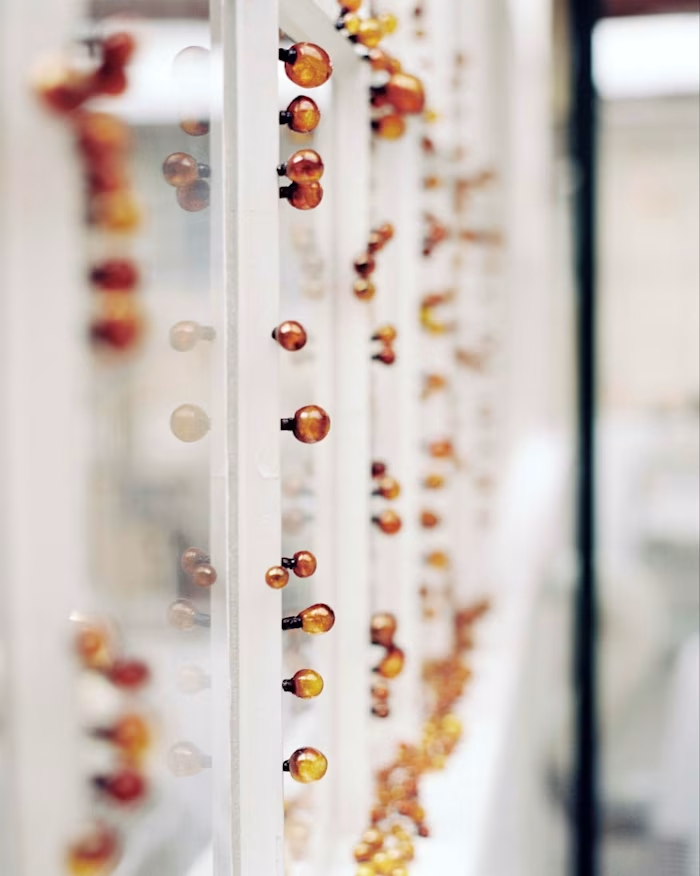
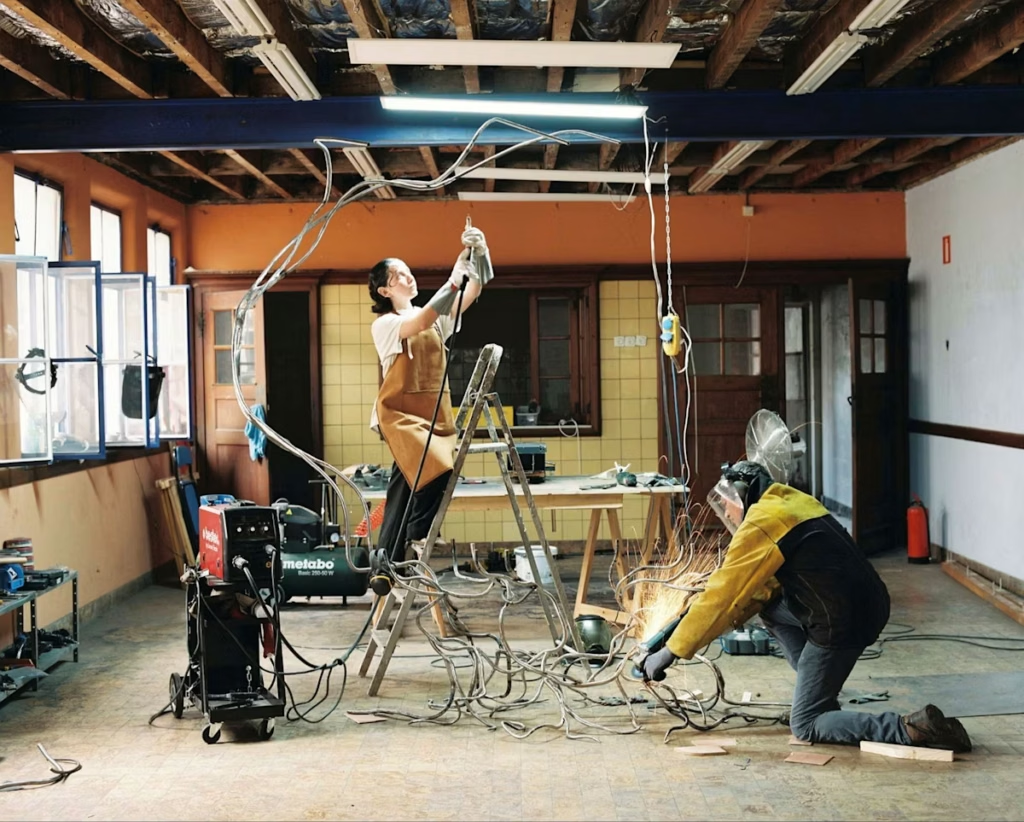
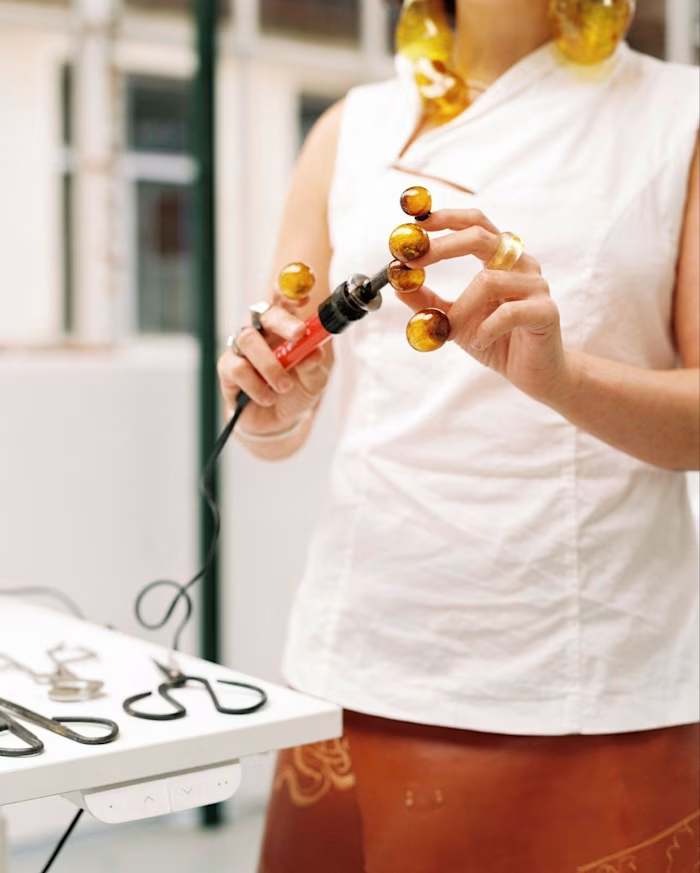
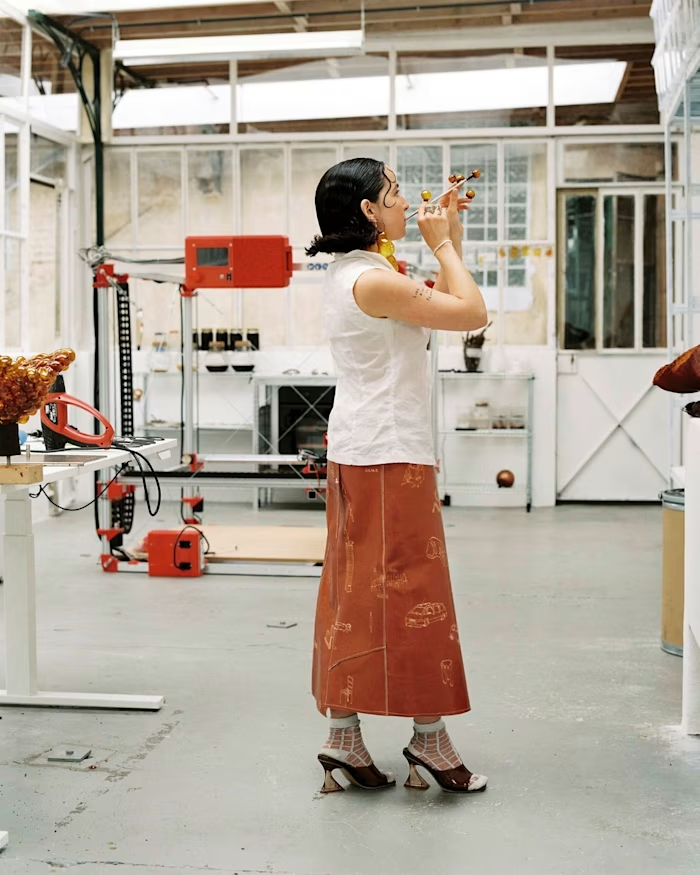
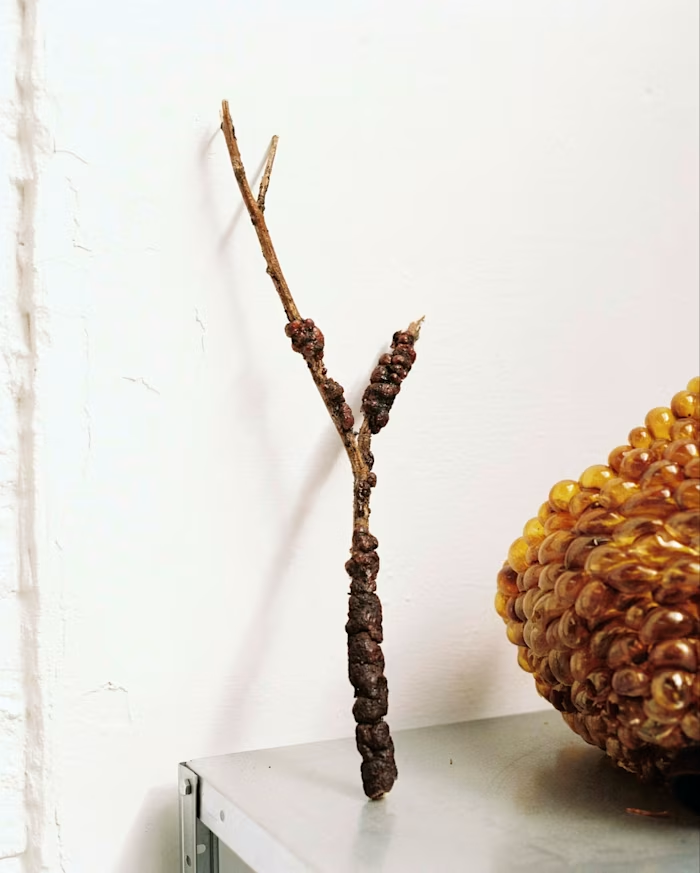
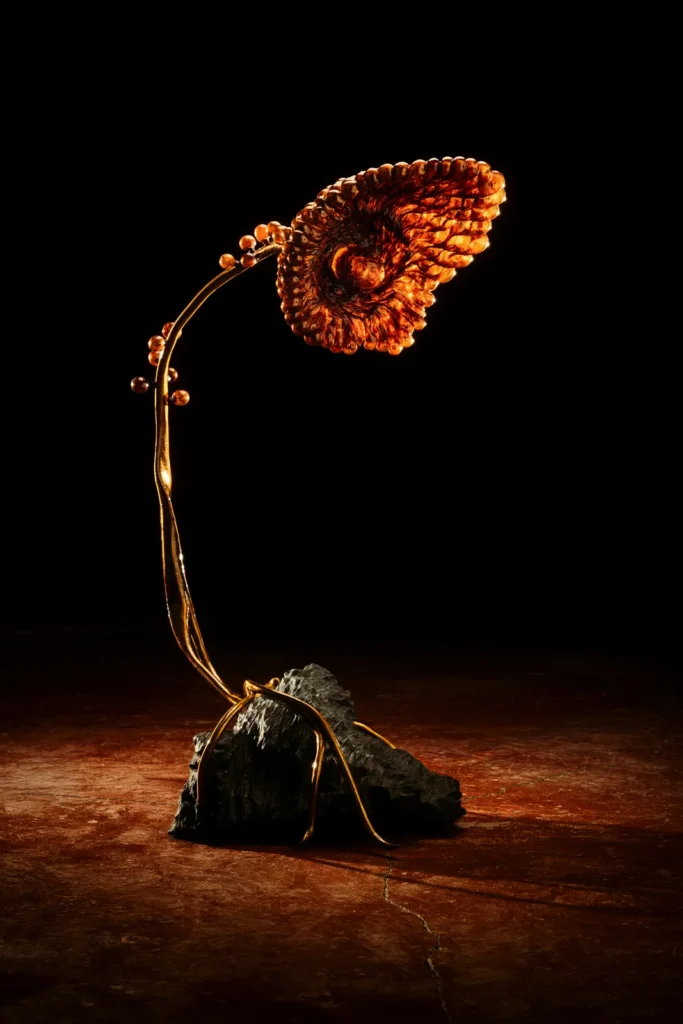
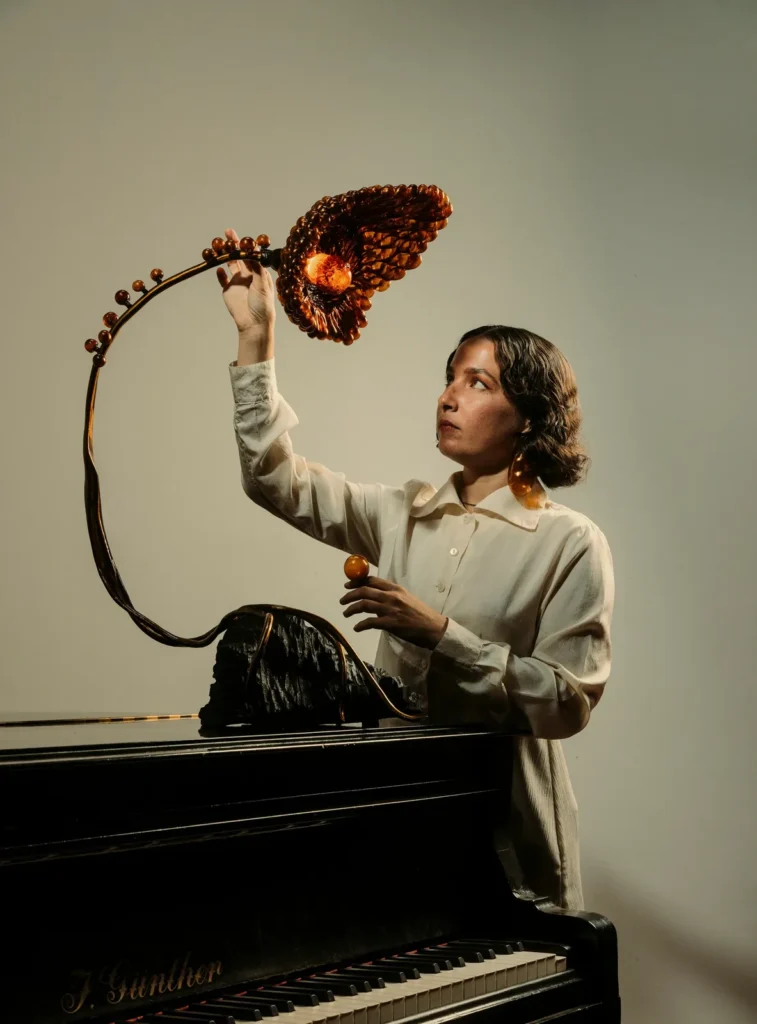
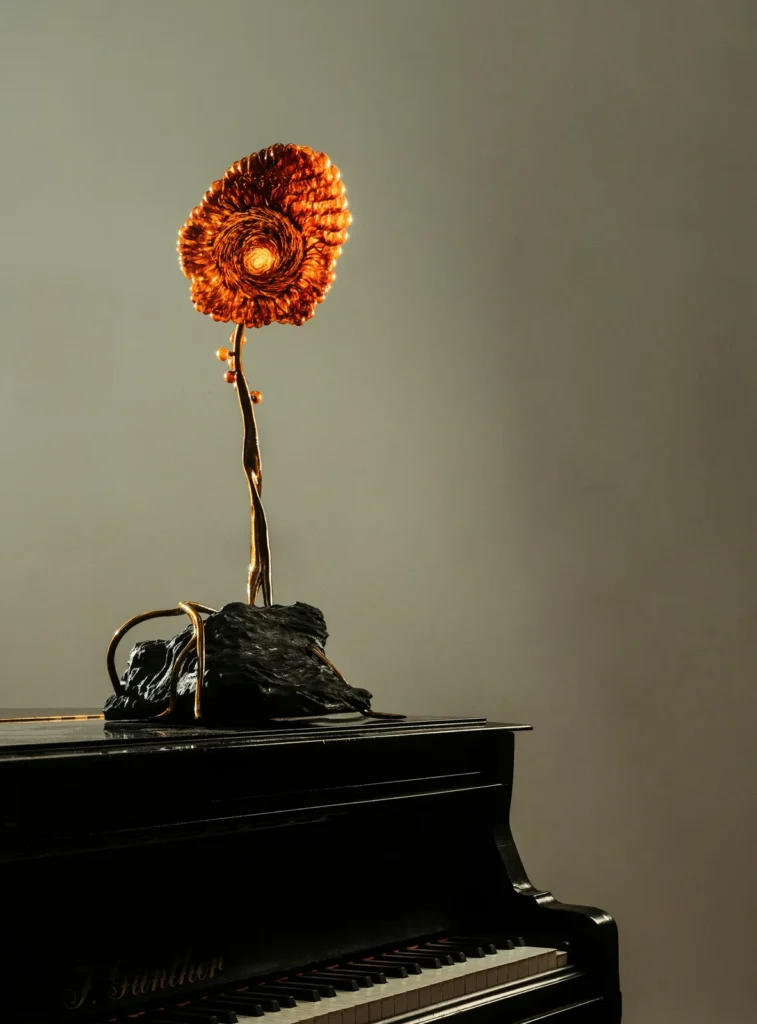
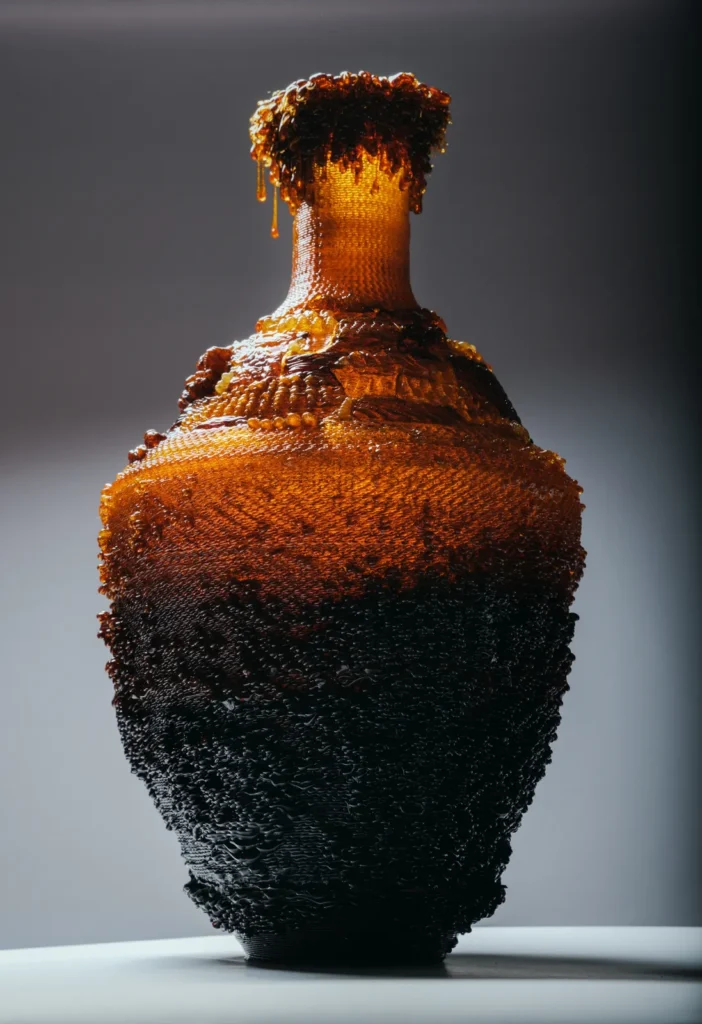
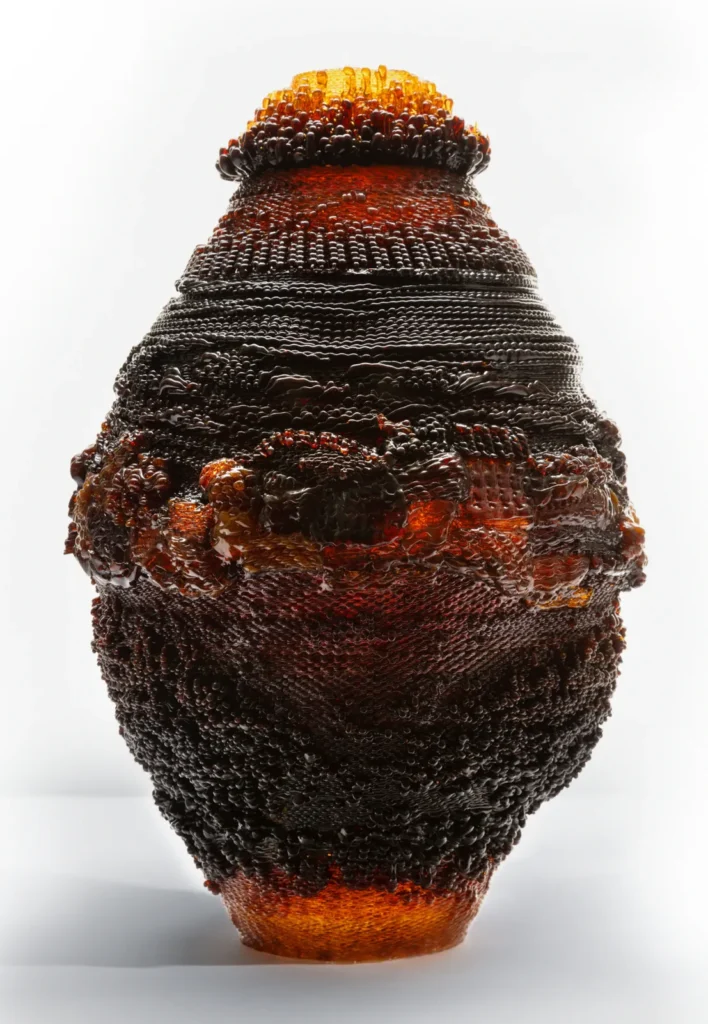
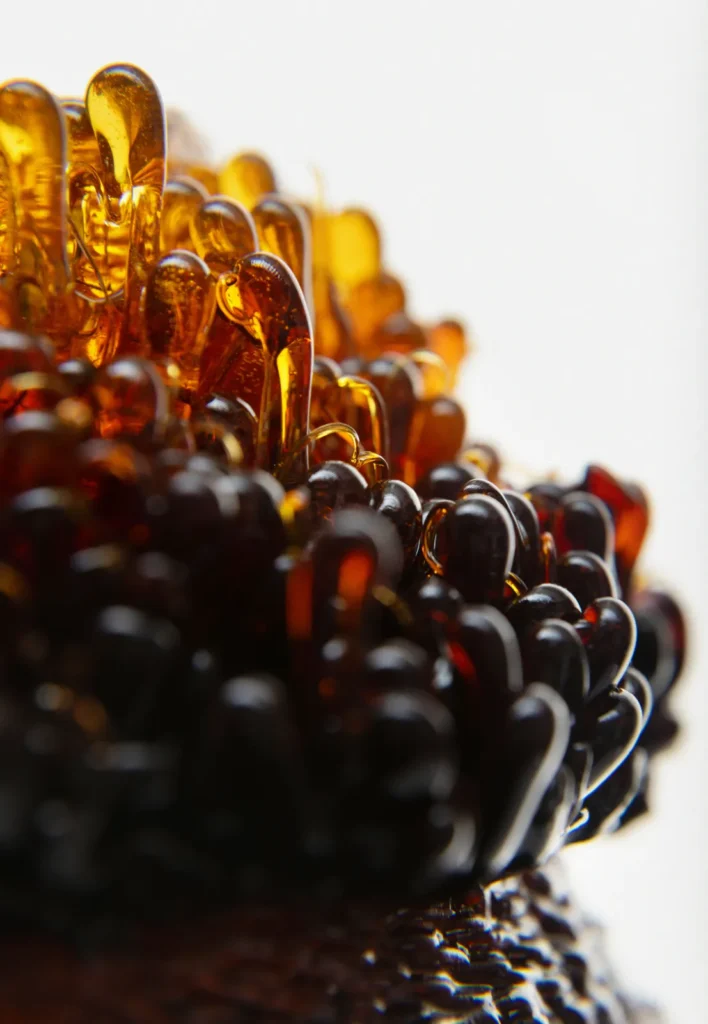
One of her discoveries was that heated lac could be blown using processes related to glassblowing. The result is a distinctive collection of translucent amber forms — sometimes clustered like flowers or cocoons, sometimes arranged across branching steel structures and illuminated from within. The natural material becomes simultaneously organic and futuristic.
What began as material experimentation has increasingly moved into the international collectible-design conversation.
In October 2026, Merhav was named one of three winners of the Dutch Design Awards Emerging Talent Award, with the jury recognizing a practice that connects ecological systems, traditional craft and new manufacturing technologies. Each Emerging Talent winner received €10,000 to support the development of their work.
Her work has also reached one of the world’s most important design collections. A piece from Merhav’s 3D-printed shellac Morpho series has been acquired for the Centre Pompidou’s permanent collection in Paris. The work demonstrates another stage of her research: taking an insect-produced material historically associated with surface coatings and turning it into an additive-manufactured three-dimensional object.
That evolution is significant.
Merhav is not simply proposing shellac as a fashionable replacement for plastic. Her work asks a more complicated question: what might manufacturing look like if designers treated other species, biological systems and traditional material knowledge as collaborators rather than simply resources?
Through glassblowing techniques, handcraft, scientific research and digital fabrication, she is giving an old material an entirely new identity.