
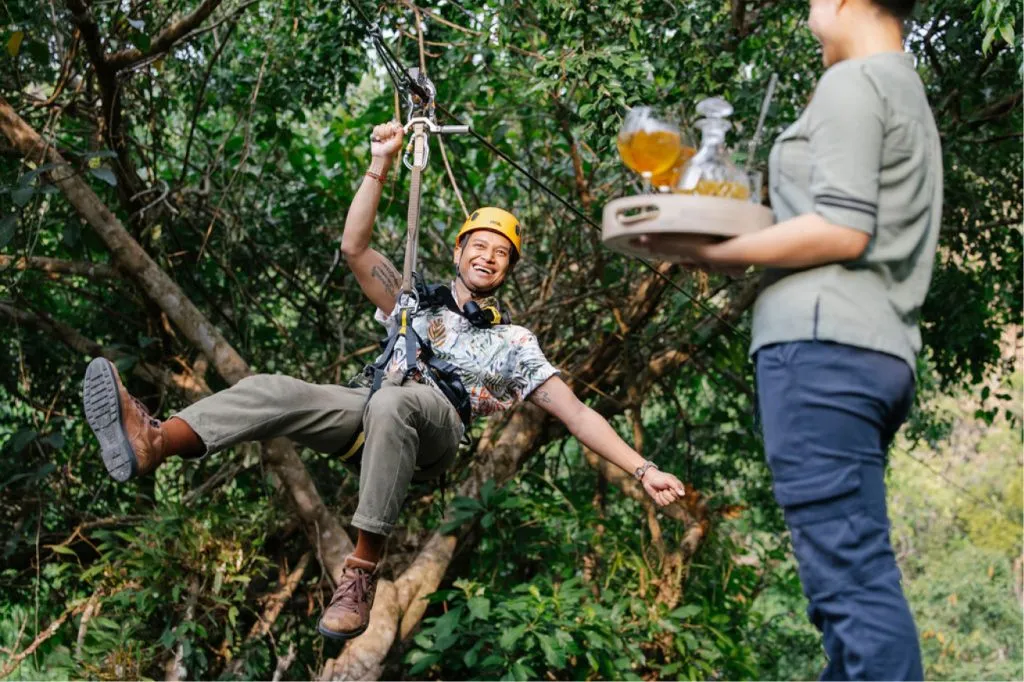
Deep inside Cambodia’s Cardamom Rainforest, there is a hotel where checking in can involve flying hundreds of meters through the jungle canopy before landing beside a waterfall and being handed a cocktail.
But the zipline is only the beginning of the Shinta Mani Wild story.
Designed by celebrated architect and hotel designer Bill Bensley with Cambodian hotelier Sokoun Chanpreda, Shinta Mani Wild was created around a remarkably different proposition: could a luxury hotel make a threatened rainforest more valuable alive than cut down?
The Forest Came First
The story begins in 2015, when Bensley and Chanpreda acquired a 350-hectare — approximately 865-acre — tract of Cambodia’s Cardamom Rainforest.
The land sat within an important wildlife corridor and faced pressures including logging, mining, development and illegal hunting. The surrounding forest is one of Southeast Asia’s major biodiversity strongholds, with Shinta Mani saying the area provides habitat for dozens of species appearing on the IUCN Red List.
Instead of developing the property conventionally, the partners decided that tourism could become a mechanism for protecting it.
The result was a high-yield, low-impact model: build very few accommodations, charge for an exceptional experience, employ people from surrounding communities and use tourism revenue to help fund protection of the landscape.
Shinta Mani Wild officially opened in late 2018.
This May Be the Most Dramatic Hotel Check-In in Asia
Guests arriving through Phnom Penh or Sihanoukville can be collected by private vehicle as part of the stay.
Eventually, the paved world disappears.
A vintage Jeep carries guests farther into the forest until they arrive beneath Shinta Mani Wild’s zipline tower.
Then comes the decision.
Climb 102 steps, strap into a double-cable system and launch yourself approximately 400 meters across the rainforest canopy at speeds that can reach roughly 50 kilometers per hour.
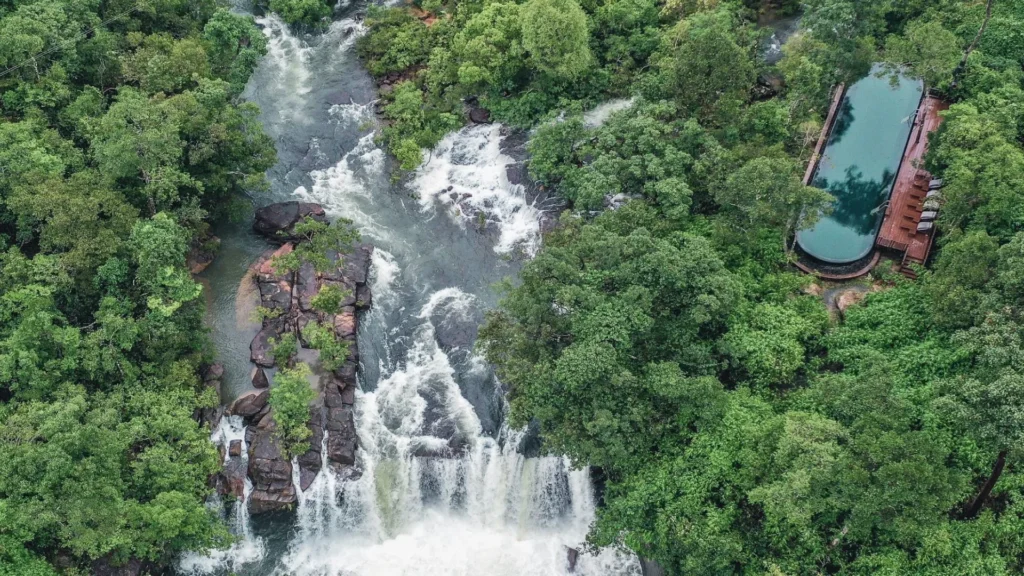
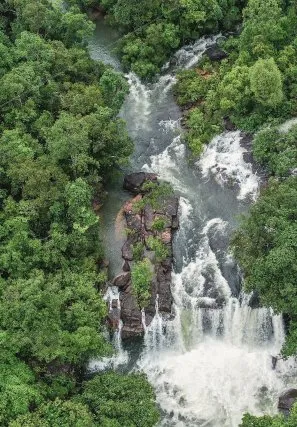
The journey continues across the river and past the waterfalls before another zip delivers guests near the Landing Zone Bar, overlooking Raging Big Sister Falls.
And waiting at the other end?
A cocktail.
It is one of those hospitality ideas that sounds engineered primarily for Instagram. But there is another layer to it: reducing vehicle traffic and major road construction through the property also supports the camp’s light-on-the-land philosophy.
And for guests who have no interest in flying through the jungle with their luggage somewhere behind them, the resort says the zipline is optional. A vehicle arrival can be arranged instead.
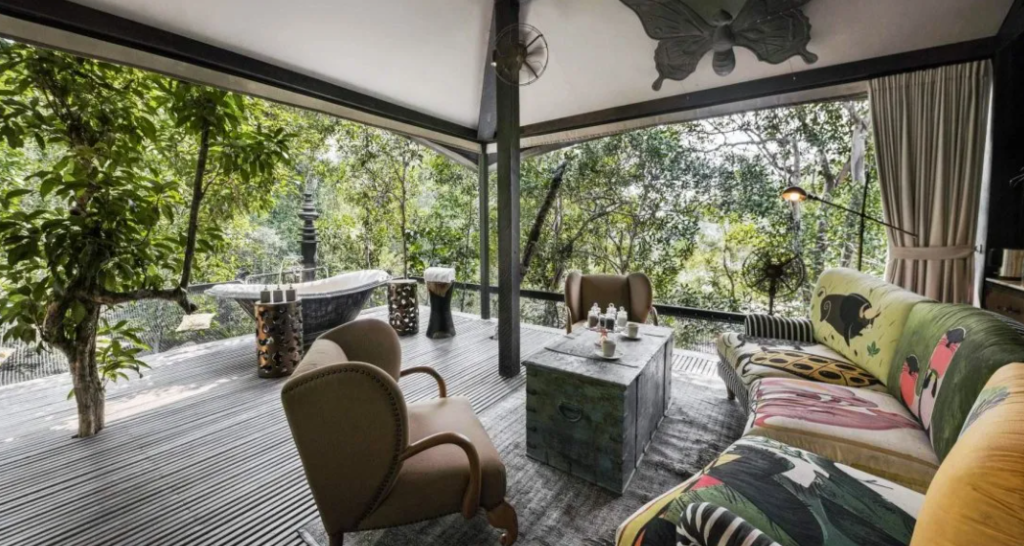
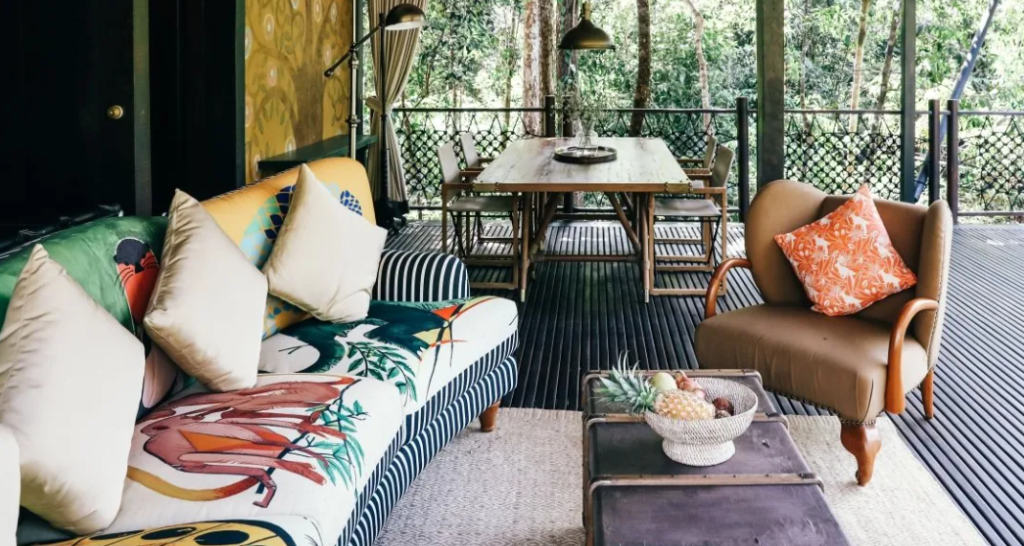
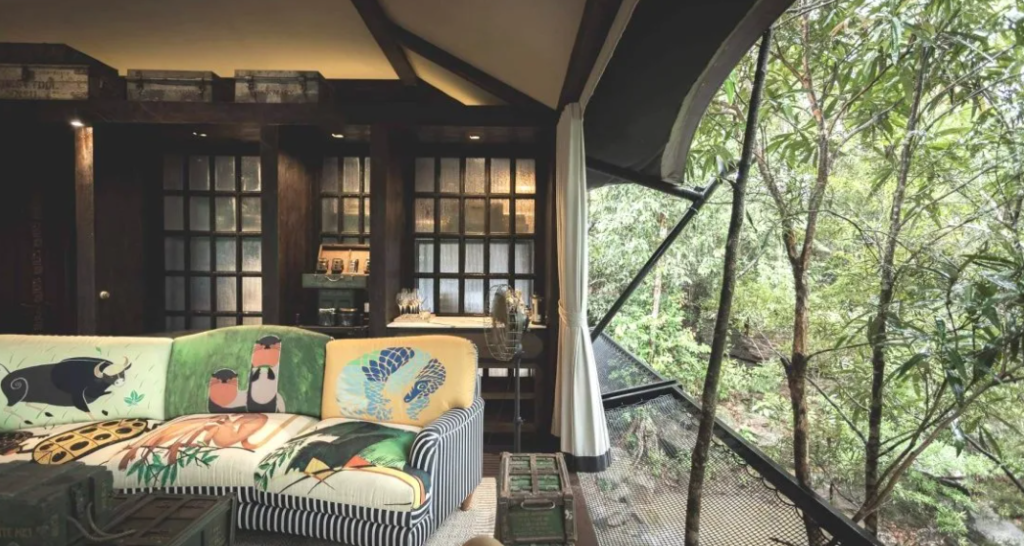
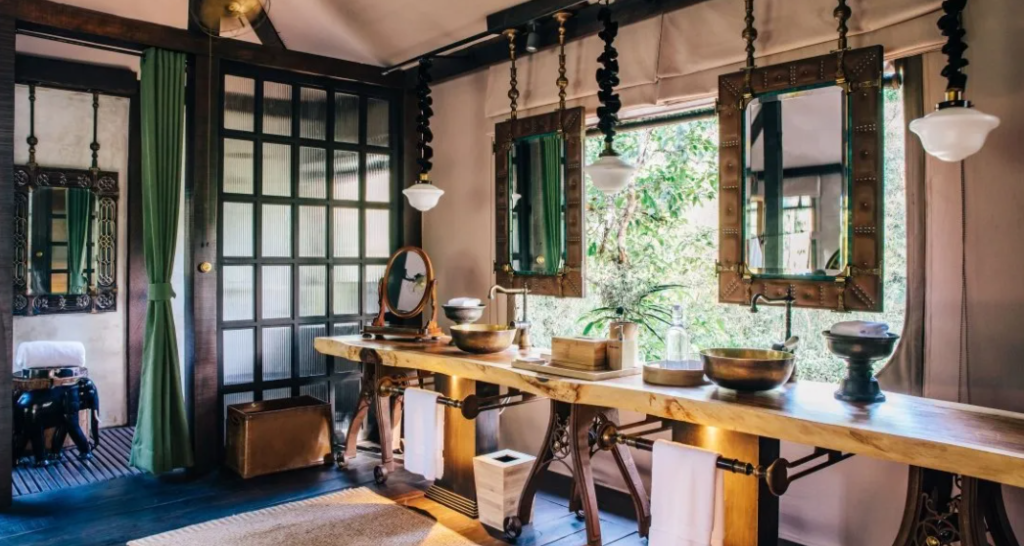
The Tents Are Anything but Camping
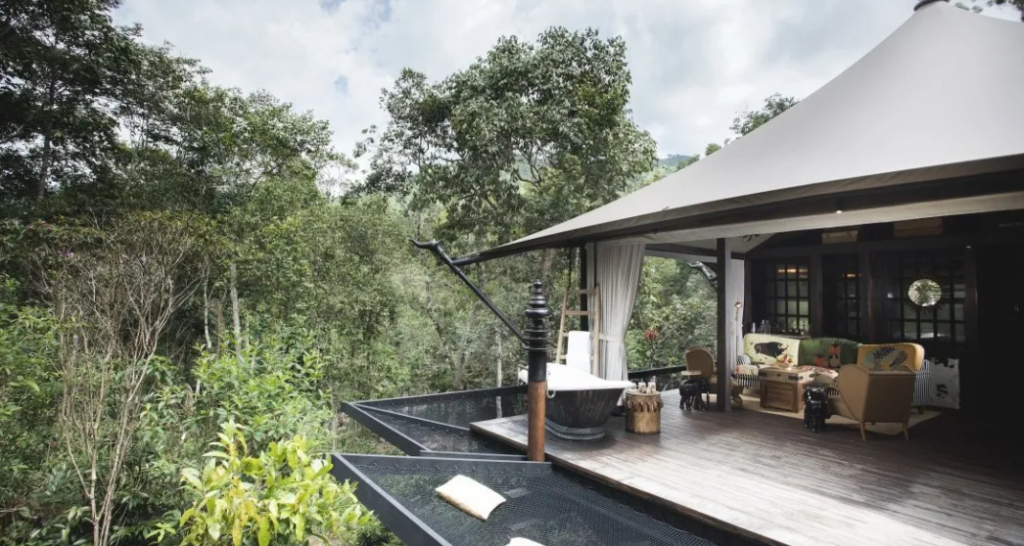
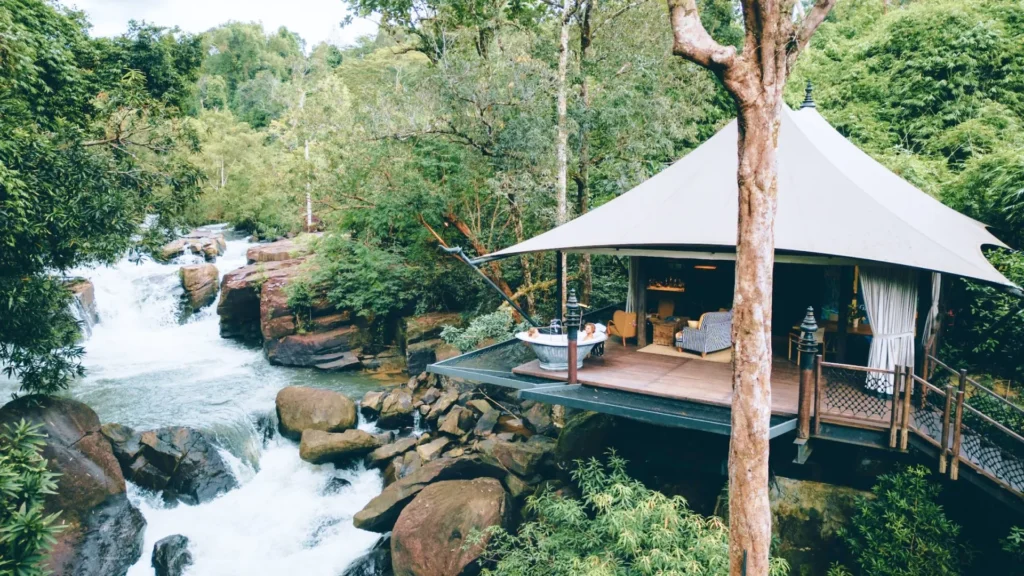
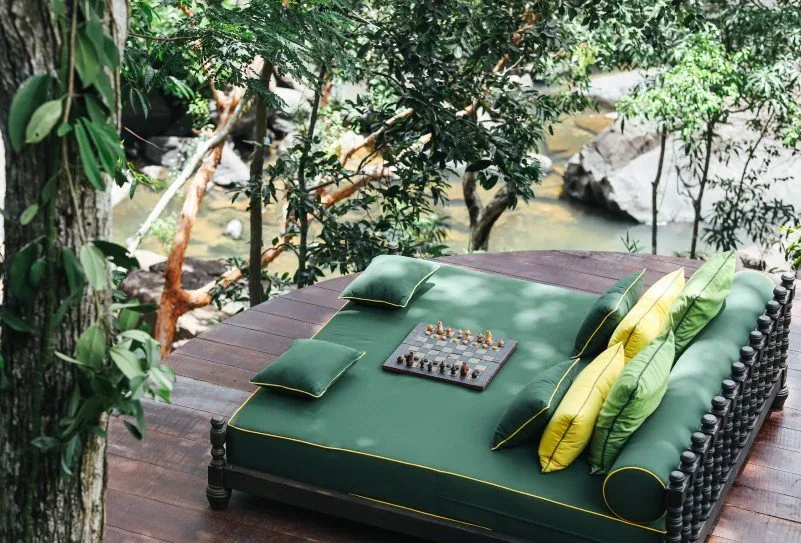
Shinta Mani Wild has only 15 tented accommodations stretched along the river.
Fourteen are one-bedroom tents, while the collection also includes a larger two-bedroom option.
Calling them tents, however, undersells them considerably.
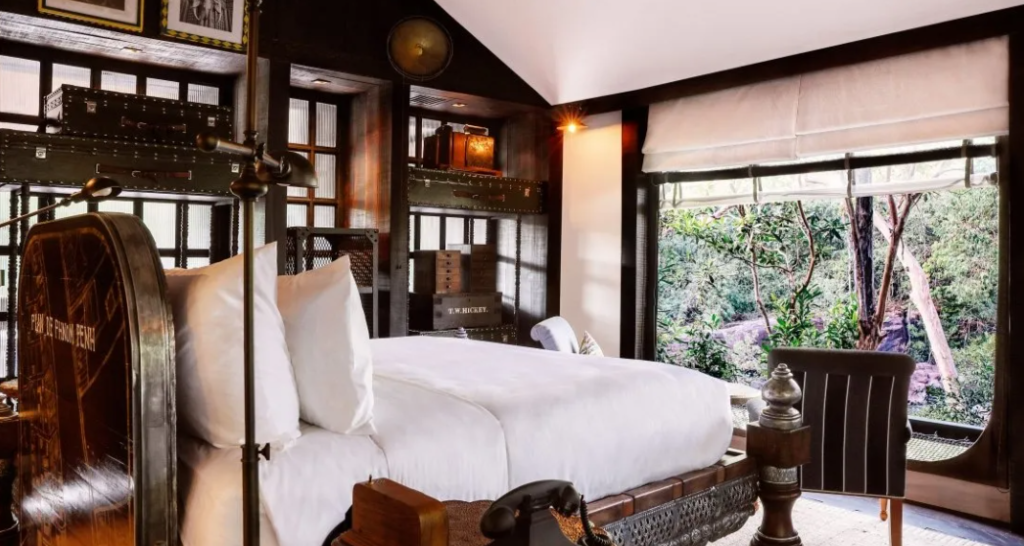
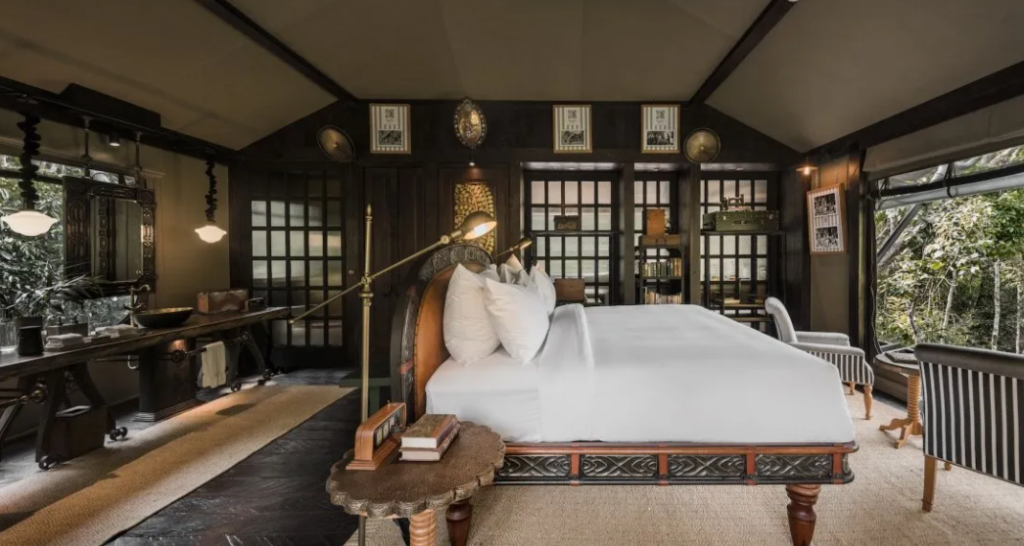
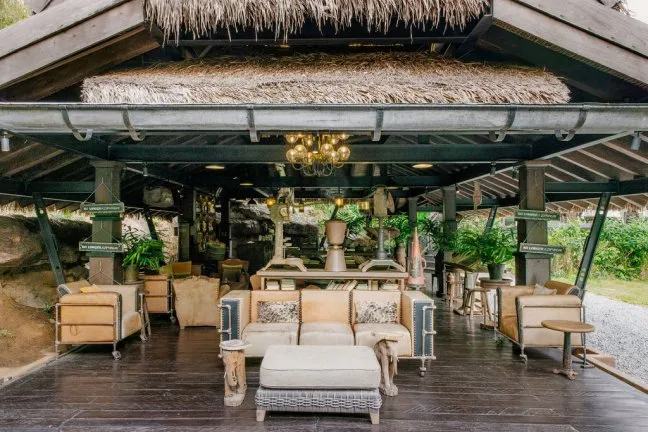
Inside are air-conditioned bedrooms, substantial beds, vintage furniture, antiques, books, art and the theatrical design language for which Bensley is known. Outside, expansive decks place guests directly above or beside the river, with freestanding bathtubs positioned for long baths accompanied by the sound of moving water.
Many of the structures sit on stilts, helping reduce disruption to existing waterways, forest terrain and animal movement.
No two tents are identical.
Their themes range from Cambodian royalty and conservationists to butterflies, elephants, botanists and the Wildlife Alliance. One tent draws directly from Jacqueline Kennedy’s celebrated 1967 visit to Cambodia, which became part of Bensley’s broader fantasy of what an extravagant Cambodian wilderness expedition during that era might have looked like.
The result is less safari minimalism and more theatrical jungle escapism.
The Staff Are Part of the Conservation Model
One of Shinta Mani Wild’s defining elements is its team of Bensley Butlers.
They operate somewhere between personal host, wilderness guide, concierge and adventure partner.
A Butler can help unpack a guest’s bags in the morning, lead a hike later in the day, arrange an alfresco lunch beside a waterfall and help organize an expedition into the forest before dinner.
That level of service matters because there is deliberately no rigid resort itinerary. A stay can be highly active or almost completely indulgent.
More importantly, employment itself is part of the conservation strategy.
Bensley has said that members of the team include people who previously relied on activities such as poaching, while the property also works with former loggers from neighboring communities. Shinta Mani’s wider hospitality operation has additionally trained disadvantaged Cambodian students through the Shinta Mani Foundation.
The principle is straightforward: conservation becomes far more sustainable when local communities have meaningful economic alternatives tied to keeping the forest intact.
Dinner May Have Come From the Forest Around You
Food at Shinta Mani Wild follows the same idea.
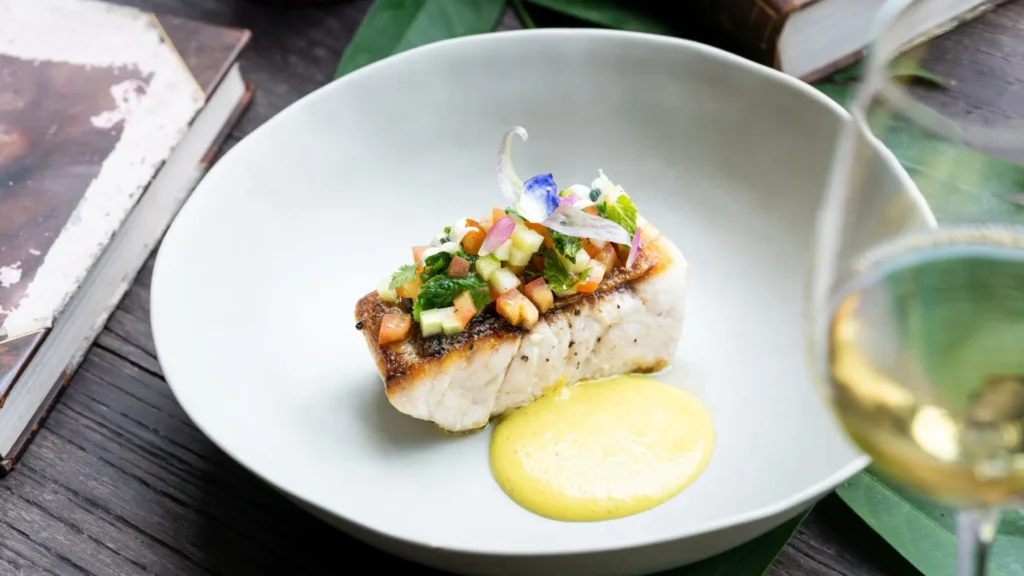
The property operates gardens, an organic farm and a free-range chicken operation while its culinary team regularly forages in the surrounding landscape.
Ingredients can include jungle herbs, mangosteen, wild potatoes, freshwater crabs and even red ants — a traditional local ingredient.
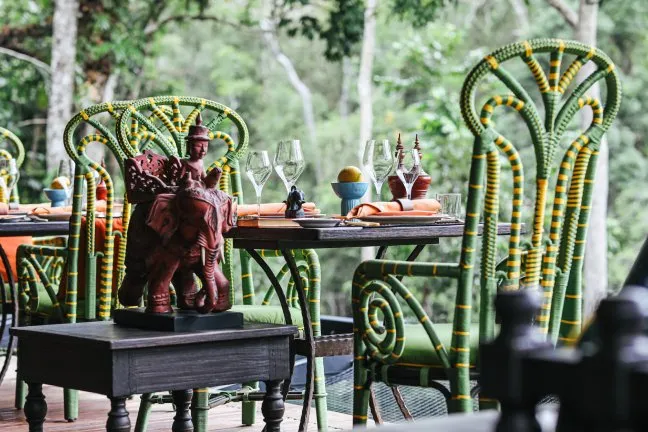
Meals range from breakfasts and elaborate dinners at Headquarters to picnics in the forest and meals positioned beside waterfalls.
The Landing Zone doubles as one of the camp’s signature cocktail destinations, with drinks incorporating ingredients grown or gathered nearby.
It is luxury dining, but the landscape remains part of the menu.
Then There Are the Rangers
This is where Shinta Mani Wild becomes more than an unusually beautiful resort.
The property works with Wildlife Alliance, whose rangers patrol the area against illegal logging, hunting and other threats.
Guests can join ranger patrols for experiences lasting several hours, traveling into the forest and seeing what wildlife protection looks like in practice.
The camp also maintains camera traps used to monitor animals, while other experiences include guided foraging, birdwatching, butterfly encounters, kayaking, hiking, mountain biking and excursions aboard a custom expedition boat.
According to Shinta Mani Wild’s current conservation dashboard, ranger operations associated with the project have removed more than 18,000 snares and confiscated more than 1,000 chainsaws, alongside other enforcement work.
Suddenly, a night in an expensive tent has a very different context.
Even Doing Nothing Is an Experience
Not every day needs to involve pursuing poachers through the forest.
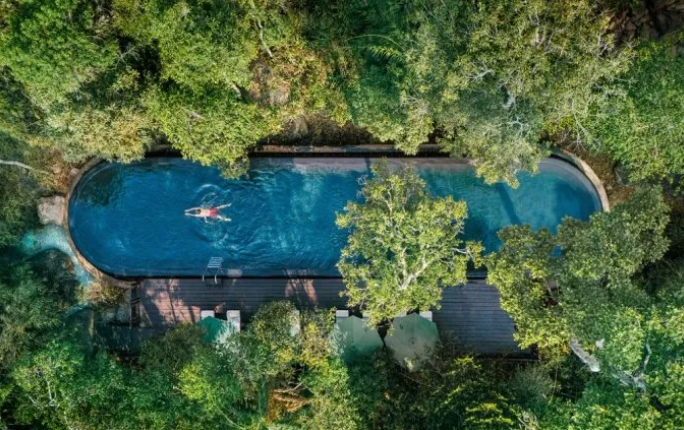
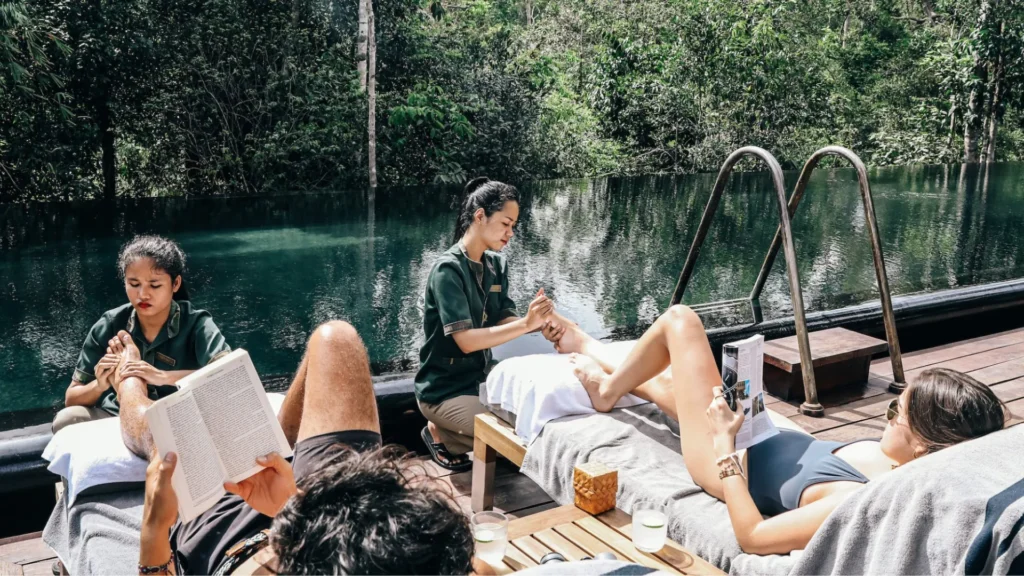
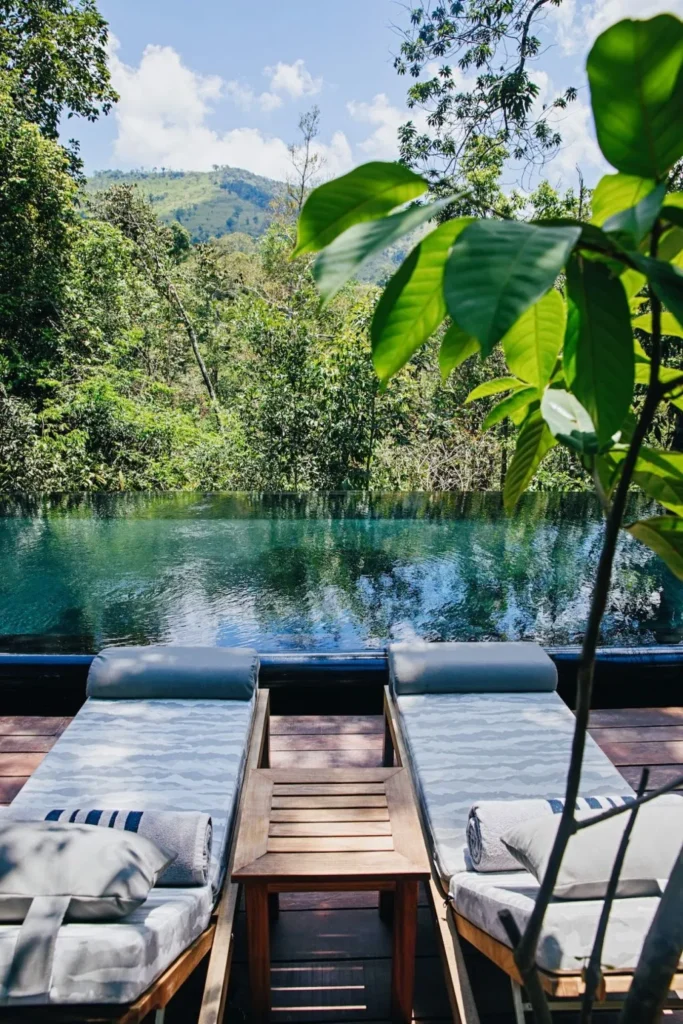
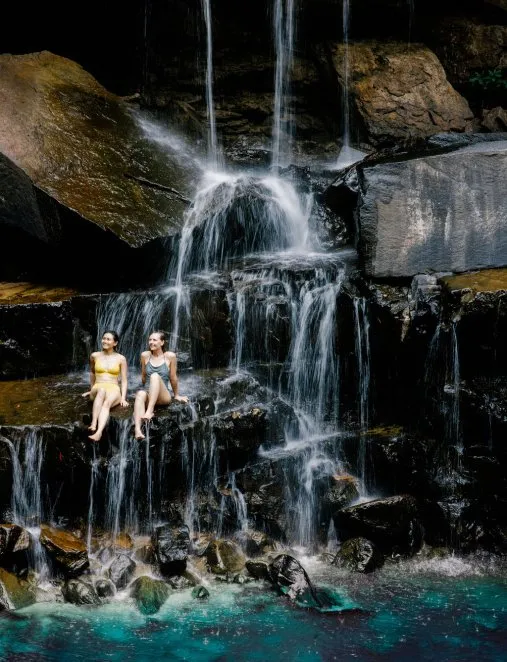
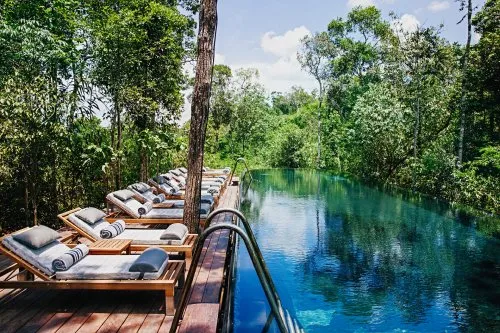
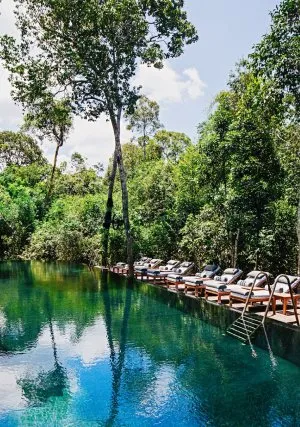
Guests can swim in the river or at the camp’s long black Cistern pool, arrange yoga and meditation, sit beside waterfalls or take advantage of spa treatments offered in the spa, beside the river or inside their tent.
Unlimited spa treatments are part of the all-inclusive model.
So are meals, drinks, airport transfers and most activities. Shinta Mani Wild currently requires a minimum three-night stay, although the property recommends allowing several days if guests want to experience the forest properly.
Why Shinta Mani Wild Matters
Plenty of hotels now use the language of sustainability.
Shinta Mani Wild is more interesting because conservation was not added to the hotel after it was built.
It was the reason for building the hotel.
The tents, the extraordinary service, the zipline, the cocktails and the outdoor bathtubs create the fantasy. But underneath all of that is an economic experiment: use a tiny number of high-value tourism experiences to create jobs, finance conservation and make leaving a forest untouched commercially defensible.
That does not make luxury tourism impact-free.
It does make Shinta Mani Wild one of the more compelling examples of hospitality being used intentionally as a conservation tool.
And somewhere between launching yourself across a Cambodian rainforest, soaking in a bathtub above a rushing river and heading into the forest with the people responsible for protecting it, the distinction between hotel and destination disappears.