
After a two-year absence, giant pandas have returned to Atlanta as six-year-old Ping Ping and Fu Shuang begin a new chapter at the redesigned Arthur M. Blank Panda Grove.
There are pandas in Atlanta again.
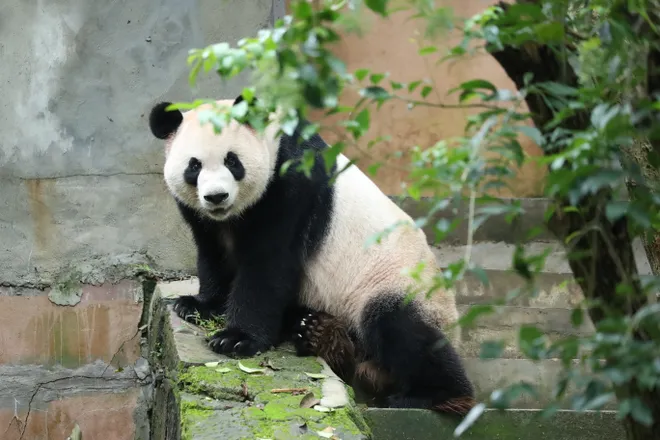
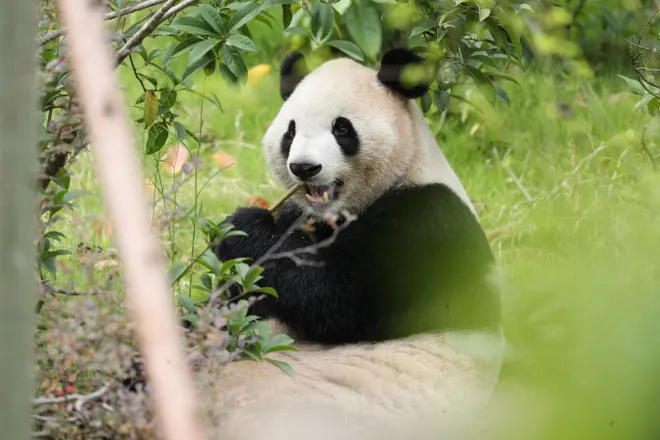
On November 6, Zoo Atlanta officially introduced Ping Ping and Fu Shuang, two six-year-old giant pandas whose arrival restores one of the city’s most recognizable wildlife attractions after a two-year absence.
The male-and-female pair arrived from China in September under a new 10-year agreement and spent several weeks acclimating before meeting the public. Their debut drew panda enthusiasts to the zoo, where the animals spent much of their first public appearance doing exactly what generations of visitors have come to love watching pandas do: eating bamboo, exploring and relaxing.
But their arrival represents something larger than a new attraction.
A RETURN TO ATLANTA
Giant pandas have a long history at Zoo Atlanta.
The zoo’s previous panda era began in 1999 with the arrival of Lun Lun and Yang Yang and ultimately lasted 25 years. That chapter ended in 2024, when the remaining four pandas in Atlanta returned to China.
Ping Ping and Fu Shuang now begin the next one.
Both were born at the Chengdu Research Base of Giant Panda Breeding in China. Ping Ping is recognizable by his pronounced dark eye markings, while Fu Shuang has been described as having a more prominent forehead.
Their arrival also places Atlanta back on a very short list. Zoo Atlanta is now one of only three zoos in the United States housing giant pandas, alongside the Smithsonian’s National Zoo in Washington, D.C., and the San Diego Zoo. It is the only zoo in the Southeast with the species.
A $6 MILLION NEW HOME
Their public debut also introduced visitors to the completely redesigned Arthur M. Blank Panda Grove.
Zoo Atlanta says the approximately $6 million renovation expanded and upgraded indoor dayrooms, added new climbing structures and pools, improved outdoor habitats and introduced new landscaping and water features.
The new environment was designed around panda wellbeing while creating a more immersive experience for visitors.
The habitat carries Arthur Blank’s name in recognition of his longtime support for Zoo Atlanta’s panda program, which dates to the arrival of Lun Lun and Yang Yang in 1999.
MORE THAN A CROWD-PLEASER
Giant pandas have occupied a unique place at the intersection of conservation and international relations for decades.
China’s international panda programs have supported research and breeding efforts while also becoming an unmistakable form of cultural diplomacy. Agreements have expanded during periods of cooperation and, at times, ended as political relationships changed.
The arrival of Ping Ping and Fu Shuang therefore carries symbolic weight alongside its conservation purpose.
Their new home in Atlanta is part of an International Cooperative Research Agreement on Giant Panda Conservation between Zoo Atlanta and the China Wildlife Conservation Association.
It also arrives during a dramatically different period for the species. Giant pandas were once classified as endangered, but growing wild populations led the International Union for Conservation of Nature to reclassify them as vulnerable.
Their future still depends on habitat protection, conservation research and long-term international cooperation.
For Atlanta, however, the immediate message is considerably simpler.
The pandas are back.
And for visitors lining up at Arthur M. Blank Panda Grove, Ping Ping and Fu Shuang have already begun a new generation of Atlanta’s panda story.
Photos Courtesy of Chengdu Research Base of Giant Panada Breeding and Atlanta Zoo