
New York has never needed white tablecloths to produce great restaurants. Sometimes greatness looks like a counter, a line out the door, a piece of roti being folded around curry and a family recipe traveling thousands of miles before finding another home. In South Ozone Park, Queens, that story belongs to Trinciti Roti Shop, a family-run Trinidadian restaurant that has grown from a neighborhood favorite into one of New York City’s most recognized destinations for Trinidadian food.
Trinciti was founded in 2005 by Vishnu Maheepat and his wife, immigrants from Trinidad who had established roots in the Queens community years earlier. Rather than reinterpreting Trinidadian cuisine for New York, the family built the restaurant around the food they already knew: doubles, roti, curries, aloo pie, pholourie and the dishes that sit at the intersection of Trinidad and Tobago’s remarkably layered culinary history. After Vishnu’s death in 2019, his son Amit Maheepat stepped in to continue the business with the support of his mother and sister, keeping Trinciti firmly rooted in the family that created it.
That family connection matters because Trinidadian cuisine itself tells a much larger story. Centuries of Indigenous, African, Indian, European and other influences helped form a food culture unlike anywhere else in the Caribbean. In neighborhoods such as South Ozone Park and nearby Richmond Hill, generations of Caribbean immigration have brought those traditions into the everyday fabric of New York. Eater has specifically noted the importance of Trinidadian-Indian restaurants to this part of Queens and the relationship between dishes such as dhalpuri, curry and doubles and Trinidad’s history of Indian migration.
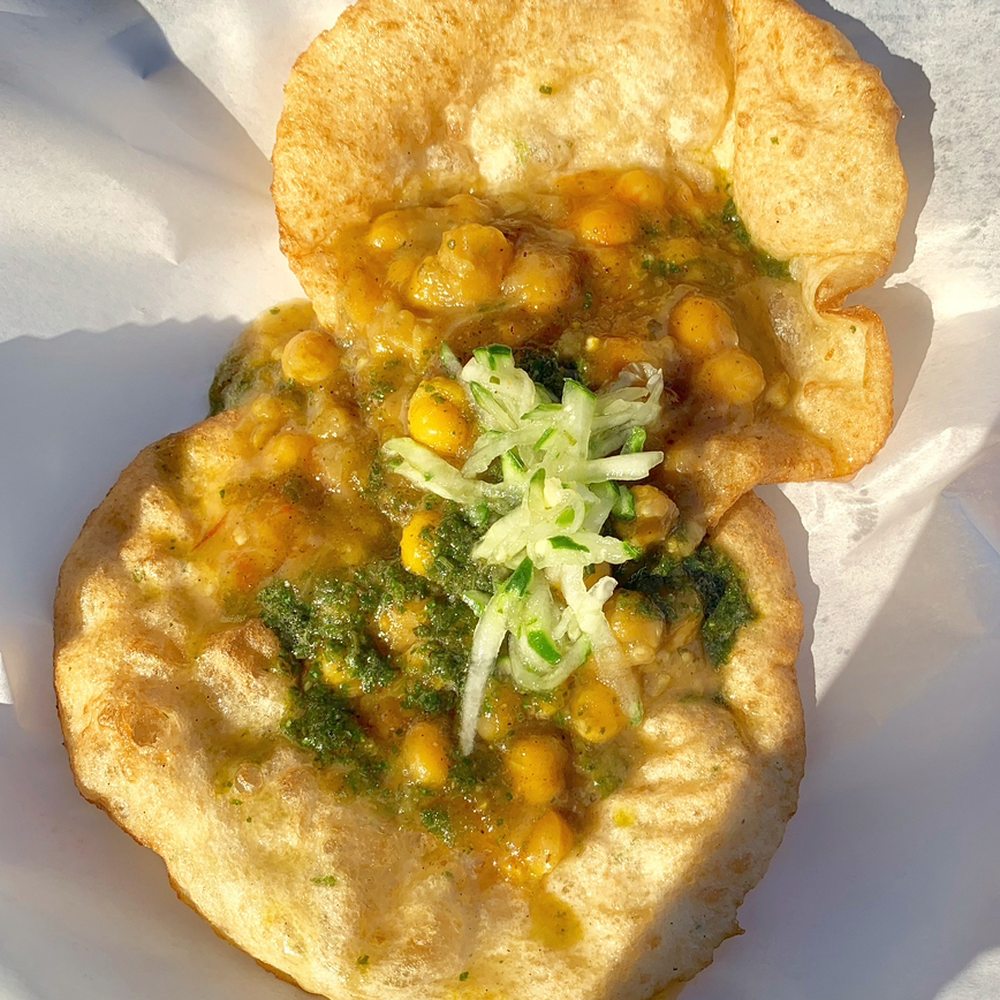
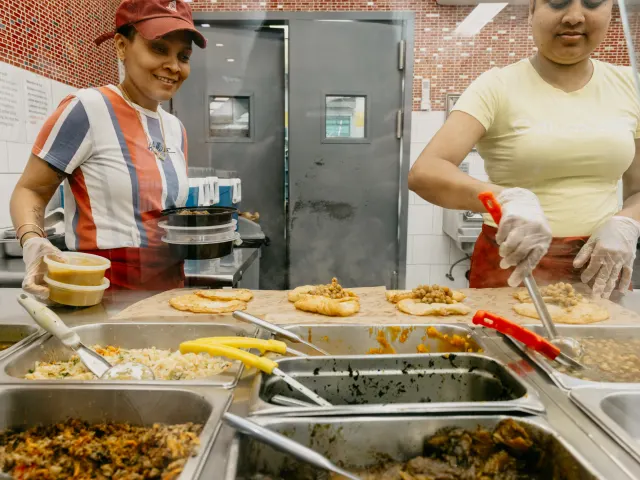
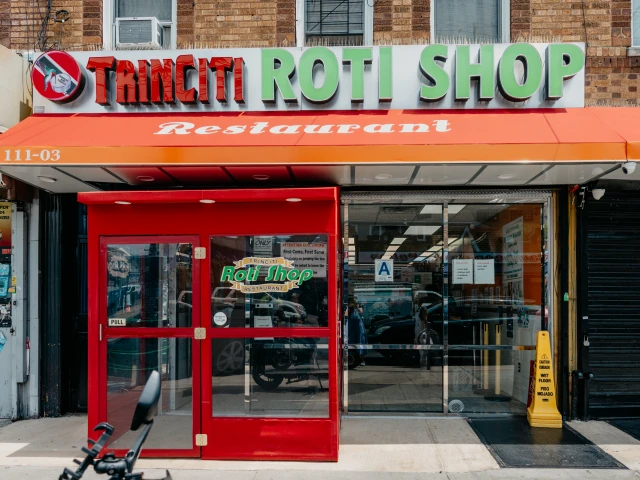
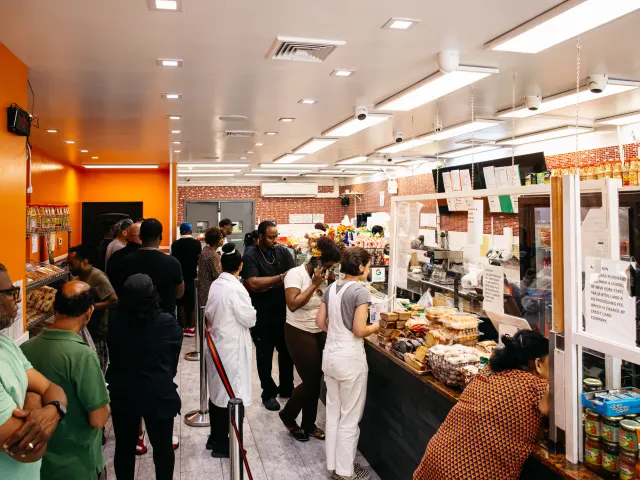
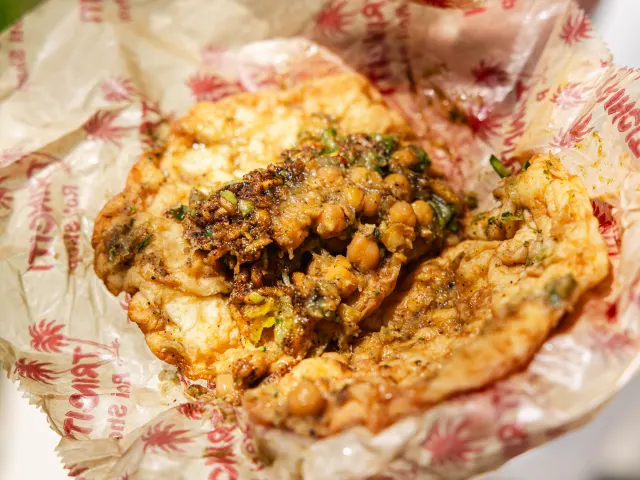
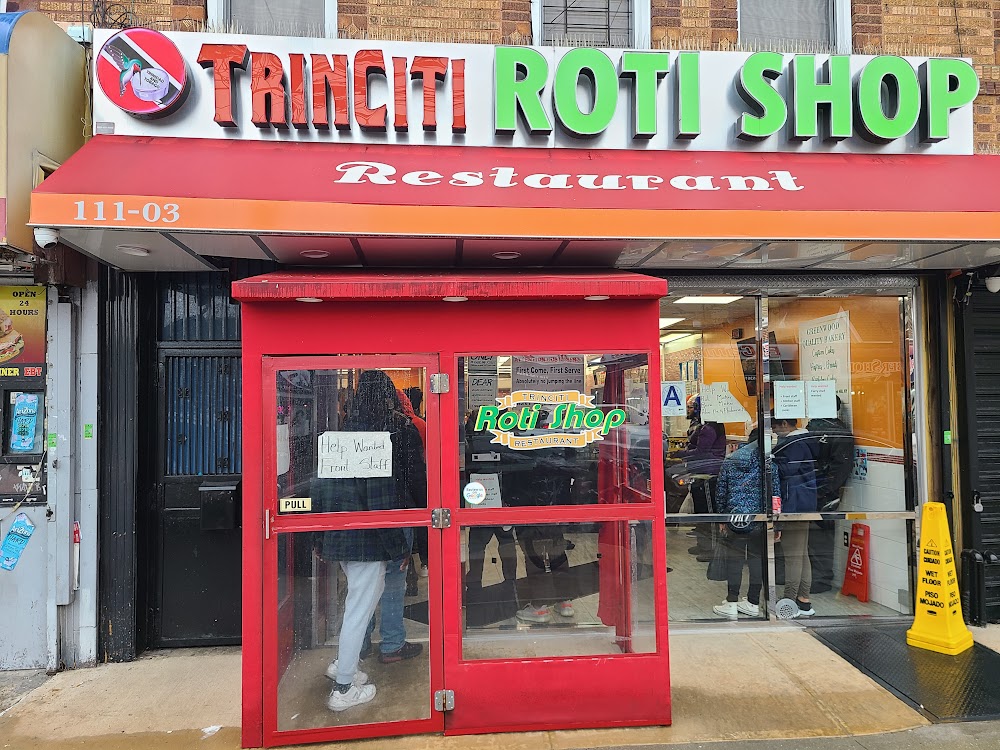
At Trinciti, doubles are one of the stars. Soft fried bara is filled with channa and finished with chutneys, pepper sauce and cucumber, with the restaurant also offering versions topped with curry chicken, shrimp, goat, duck, beef and oxtail. Then there is the roti: flaky buss-up-shut paratha designed to pull apart into soft layers, dhalpuri filled with seasoned ground split peas, and sada roti served alongside curries, vegetables and stewed meats. The menu moves through curry goat, shrimp, chicken, oxtail, vegetarian curries, Trinidadian chicken soup and, from Friday through Sunday, bake and shark. Homemade sorrel, sea moss and peanut punch complete a menu that feels less like a simplified introduction to Trinidadian cuisine and more like an invitation into it.
That authenticity has carried Trinciti well beyond its immediate neighborhood. The Infatuation awarded the restaurant a 9.2 rating, praising its doubles and roti while documenting the near-constant lines that have become part of the experience. Trinciti has also earned a place on major New York dining lists, including The New York Times’ 100 Best Restaurants in New York City. In the Times’ 2026 ranking, the South Ozone Park restaurant landed at No. 88, listed specifically as Trinidadian and Tobagonian cuisine.
What makes that recognition particularly meaningful is what Trinciti has not had to become in order to receive it. This is still a neighborhood roti shop. It is still family-run. The food is still connected to Trinidad, and dishes that were once primarily familiar within West Indian communities are now being recognized as essential parts of New York’s larger culinary identity.
For PMG, that is the real story. Trinciti represents what happens when immigrant food is allowed to remain specific. It does not need to dilute Trinidad into a generic idea of “island food.” Doubles can simply be doubles. Buss-up-shut can keep its name. Curry duck, bake and shark and pholourie can occupy the same New York food conversation as pizza, pasta, omakase and fine dining.
From Trinidad to South Ozone Park, the Maheepat family has built something that functions simultaneously as a restaurant, a family legacy and a piece of cultural preservation. Nearly two decades after opening, Trinciti is proof that some of New York’s most important restaurants aren’t trying to manufacture a story. They arrived with one.