
In Mexico City’s Centro Histórico, Limosneros turns a centuries-old building, Mexican craftsmanship and Chef Atzin Santos’s evolving cuisine into something much bigger than dinner.
Mexico City does not need another restaurant described as a “hidden gem.”
Limosneros deserves something more precise.
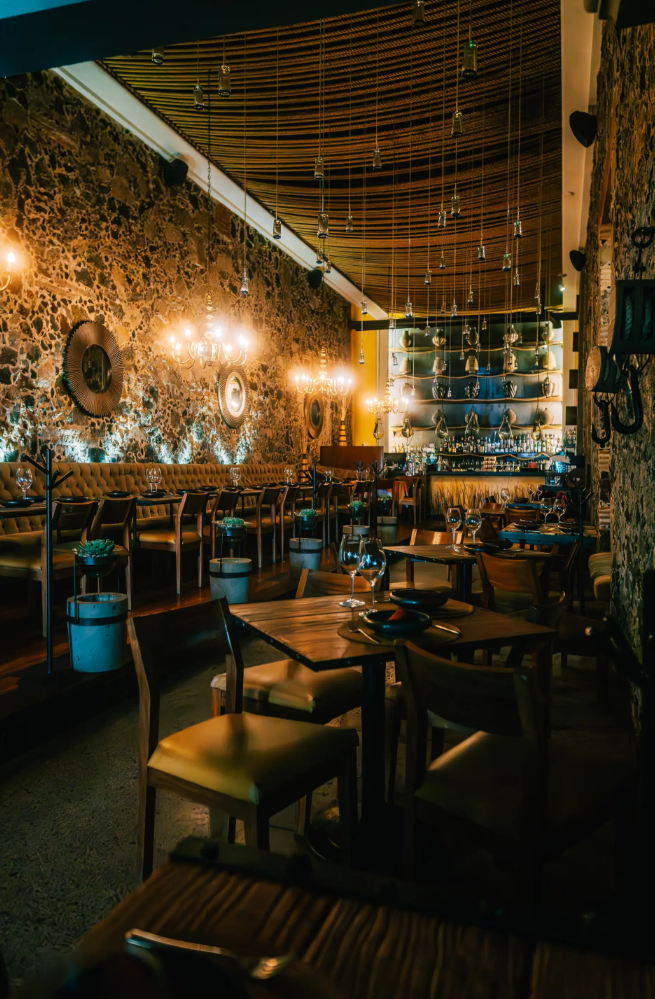
At Ignacio Allende 3 in the Centro Histórico, the restaurant occupies a space in which the history of Mexico is not being used as decoration. It is physically holding the building together.
Its walls date back more than four centuries. They were built from an assortment of materials available at the time — stone, brick, volcanic rock and other materials donated as alms. These became known as muros limosneros, or “alms walls,” eventually giving the restaurant its name.
That origin explains almost everything about Limosneros.
This is a place interested in what Mexico can become without first throwing away what Mexico has been.
A Building Allowed to Speak
Founder and designer Juan Pablo Ballesteros approached the property with unusual restraint.
Rather than stripping the historic building down and inserting an internationally recognizable version of luxury, he worked from the materials and character already present.
The old stone remains visible. Mexican craftsmanship enters the room through blown glass from Tonalá, copper work, Talavera ceramics from Puebla, textiles from Oaxaca and henequen rope from Mérida. Furniture and objects were developed specifically for the restaurant with artisans rather than treated as interchangeable décor.
The result is luxurious, but not because everything is polished. Its luxury comes from provenance. There is texture. Age. Human workmanship. Imperfection. Memory.
In an era when restaurants can begin looking strangely similar from one international city to another, Limosneros remains unmistakably Mexican.
Mexico, Without the Costume
Ballesteros comes from a family deeply connected to Mexico City’s restaurant history. His family owns Café de Tacuba, the historic institution founded in 1912.
With Limosneros, however, the objective was not nostalgia.
The more interesting question was how Mexican identity could move forward without losing its foundations. That thinking extends directly into the kitchen.
Chef Atzin Santos leads Limosneros alongside sous-chefs Ismael Ramírez and Carlos Quezada. Their cooking works with traditional Mexican techniques and ingredients while allowing experimentation, research and seasonality to push the conversation forward.
Native corn, endemic herbs, chiles, ferments and produce are not supporting characters here. They form the language of the menu. Santos’s own culinary story helps explain that balance.
Before cooking professionally, he dreamed of football. An injury redirected him toward gastronomy, where he began at Mexico City’s Nicos and eventually trained in Europe, including time inside Ferran Adrià’s legendary elBulli.
The lesson he appears to have carried forward is not that tradition should be replaced by technique.
It is that understanding tradition gives experimentation somewhere meaningful to begin.
What’s on the Table
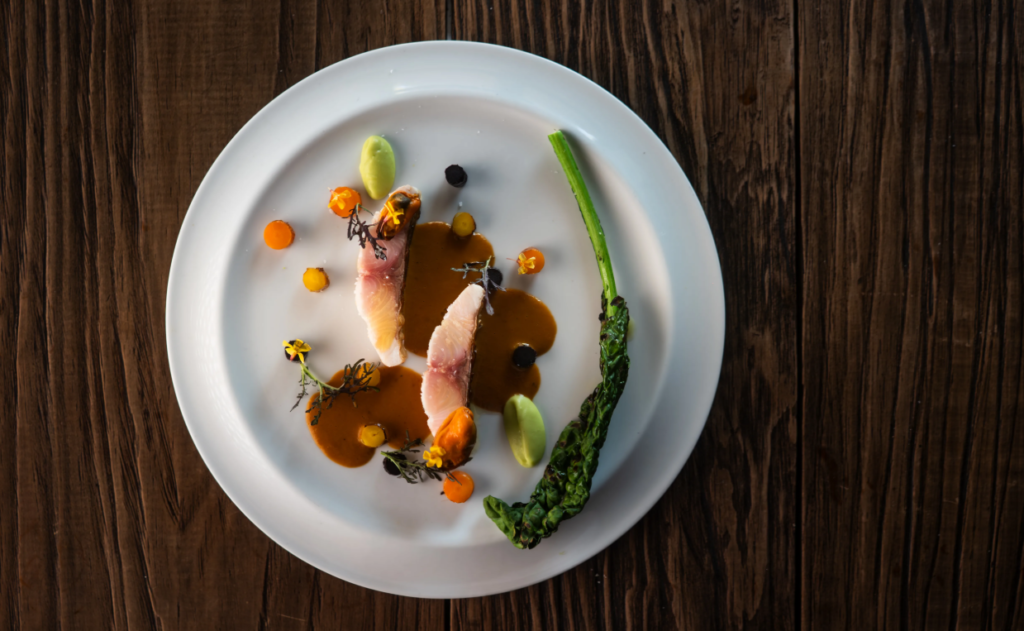
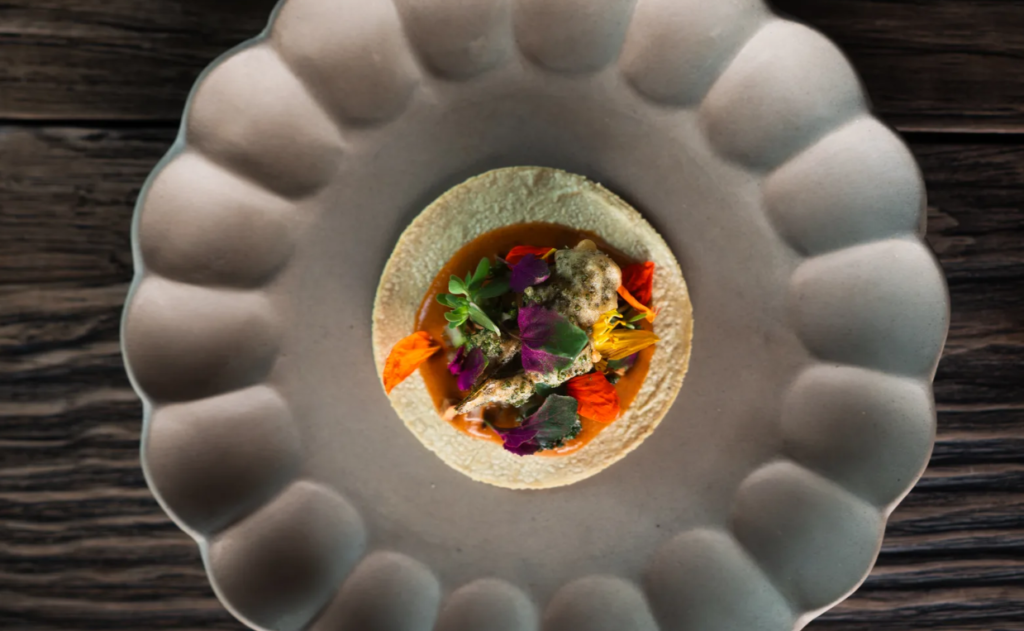
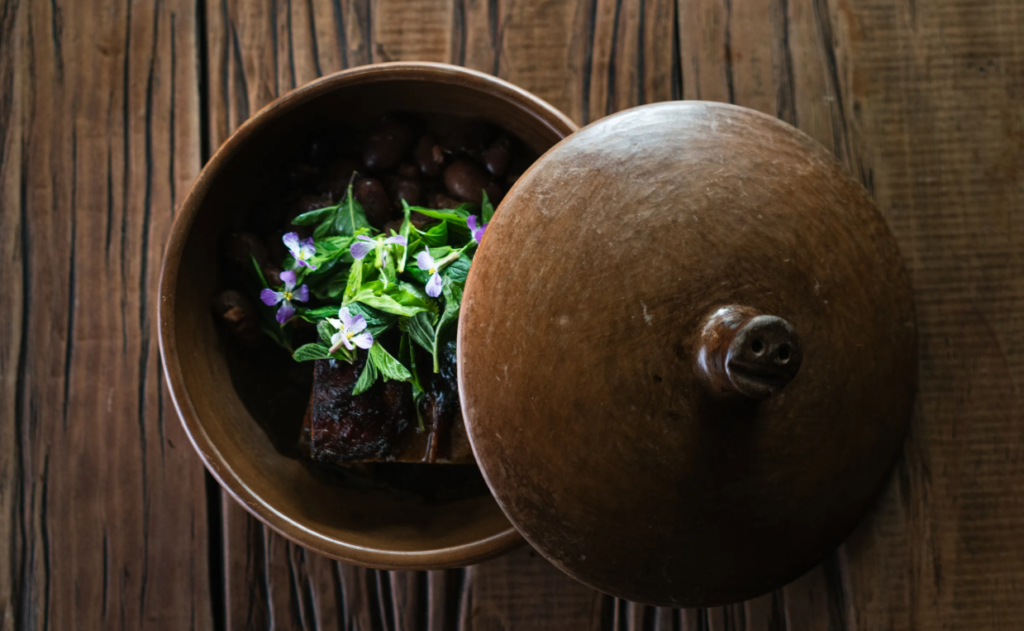
The current chef’s tasting menu reads almost like a journey through contemporary Mexican ingredients.
There is chayote gazpacho with figs, chile de agua, mint and dried nopal; a crudo pairing sustainable catch with fermented plum and chile de árbol; duck liver with camagua corn and xoconostle; a huauzontle taco with amaranth mole; and Yucatán-style pork with recaudo negro, beans, mountain herbs and tortillas.
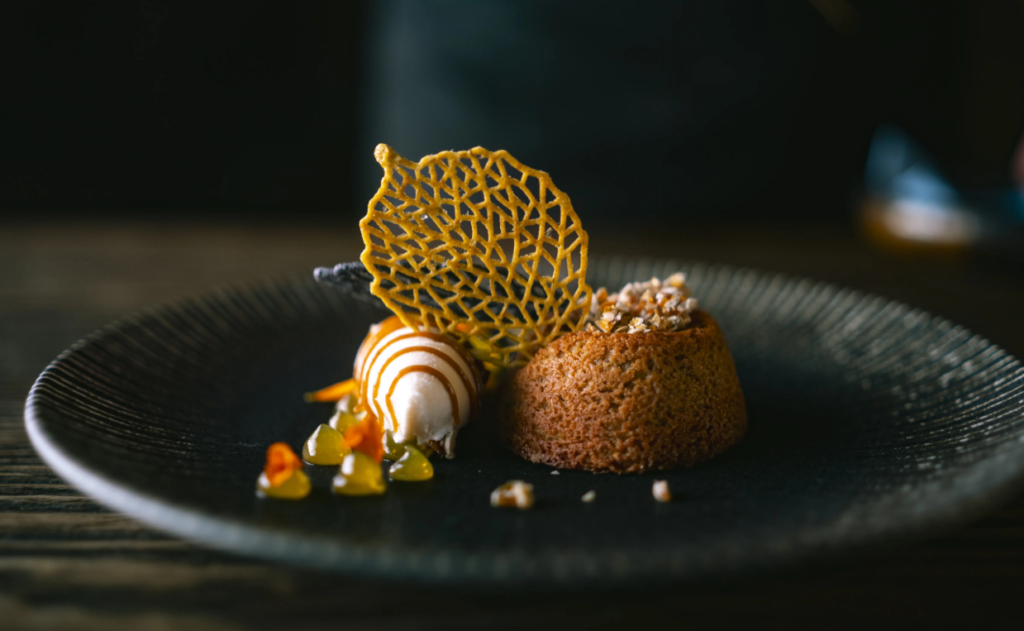
Dessert continues the geography with mamey, pistachio, vanilla from Papantla and honey.
The tasting menu is currently listed at MX$2,200, with an additional MX$1,650 pairing of boutique wines and artisanal agave spirits.
But reducing Limosneros to the tasting menu misses the larger point.
The restaurant is attempting to connect the plate to the field.
Santos has spoken extensively about farmers, producers and the people responsible for bringing ingredients into Mexico City’s kitchens. The restaurant also works seasonally and with produce connected to its own growing efforts.
That creates a different definition of sophistication.
The ingredient does not become prestigious because a chef touches it. The chef’s job is to understand why the ingredient mattered before it ever reached the restaurant.
Why Limosneros Matters
Mexico City currently occupies one of the most influential positions in global gastronomy.
That attention creates opportunity, but it can also create pressure: restaurants begin cooking for international recognition, international aesthetics and international expectations.
Limosneros offers another proposition.
Look inward first.
Its historic walls are not reconstructed nostalgia. Its Mexican objects are not styling props. Its ingredients are not there to satisfy a trend report.
Together they form an argument that contemporary Mexican luxury can be highly sophisticated without becoming culturally anonymous.
There are easier restaurants to describe.
Limosneros is more interesting because its food cannot be completely separated from its architecture, its architecture cannot be separated from its history, and none of it can be separated from Mexico.
Four hundred years after those stones were assembled, people are still gathering between them.
Only now, dinner is being served.
LIMOSNEROS
Ignacio Allende 3
Centro, Cuauhtémoc
06010 Mexico City, Mexico
Cuisine: Mexican / Traditional Mexican
Chef: Atzin Santos
Chef’s Tasting Menu: MX$2,200
Wine + artisanal agave pairing: MX$1,650
Hours: Monday–Saturday, 1:30 PM–10 PM; Sunday, 1 PM–5 PM
Reservations recommended.
Limosneros’ current menu. Limosneros | MICHELIN Guide