
The Brazilian-born designer and Sunken Blimp co-founder is building a creative practice where architecture, physical objects, fabrication, immersive technology and storytelling are increasingly difficult to separate.
There is something increasingly limiting about calling Matheus Stancati simply an architect. Architecture may provide the foundation of his creative language, but the work that has followed moves freely between physical space, digital environments, objects, augmented reality, fabrication and brand experience. At a moment when creative disciplines are becoming more interconnected, Stancati’s career offers a compelling example of what happens when a designer stops treating those boundaries as permanent.
Stancati earned his Master’s in Architecture from Florida International University in 2021, but experimentation was already central to his trajectory before graduation. AIA Miami named him its FIU Student of the Year in 2020, while his academic work later earned a Super Jury award for his master’s thesis and recognition for academic achievement. His background also expanded through computational design, digital fabrication, artificial intelligence and extended-reality development, establishing the technical vocabulary that would eventually become central to his professional work.
That thinking became more tangible with Sunken Blimp, the interdisciplinary studio Stancati co-founded in 2021 and where he serves as lead designer. The studio describes its work as helping creators and brands establish themselves within virtual and immersive environments, but its contemporary output now stretches considerably further. Experience design, mixed reality, physical installations, strategic concept development, narrative design and worldbuilding all sit within a practice that increasingly treats the physical and digital as parts of the same creative system.
One of the clearest demonstrations arrived through Sunken Blimp’s collaboration with Atlantic Records on an augmented-reality experience for Melanie Martinez’s PORTALS. Rather than treating AR as a novelty attached to a campaign, the studio translated the visual mythology surrounding Martinez into an environment audiences could enter through a mobile device. Sunken Blimp reports that the experience generated more than 48 million impressions, along with millions of opens, captures, uses, shares and saves—evidence that immersive design can operate simultaneously as storytelling, spatial experience and mass communication.

Other projects have pushed the same philosophy into education and events. For IE University, Sunken Blimp developed an experience connecting augmented and virtual reality with five different historical learning environments, allowing students to move between eras through one digital portal. The studio has also created work around VeeFriends, immersive learning, virtual stages and environments intended to function less like traditional websites and more like spaces people can inhabit, navigate and experience.
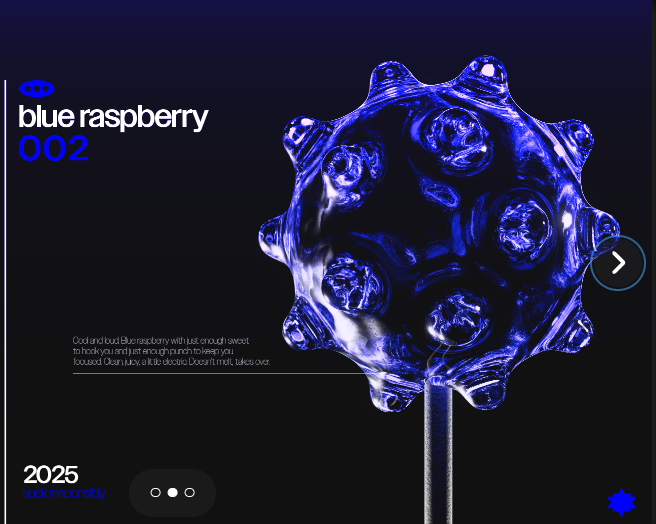
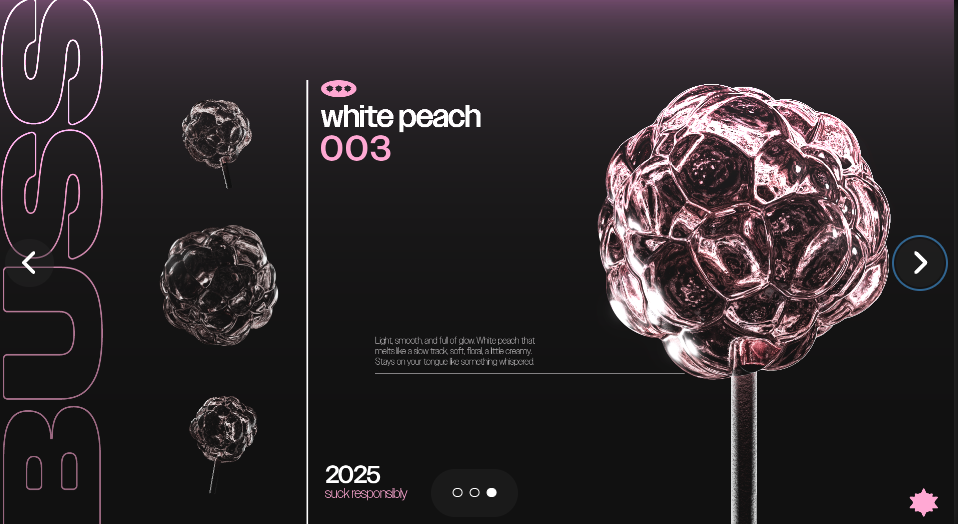
What makes Stancati especially interesting now, however, is that the trajectory has not remained locked inside the vocabulary of the metaverse. Recent Sunken Blimp work shows the studio moving through physical installations, product experiments, animation and contemporary brand design with the same willingness to prototype. During New York Design Week 2026, the team developed a physical display tower for Buss lollipops at a Noware launch event, while other recent work has included animation connected to a Spider-Man and Liquid I.V. collaboration and experiments with augmented-reality anatomy flashcards.
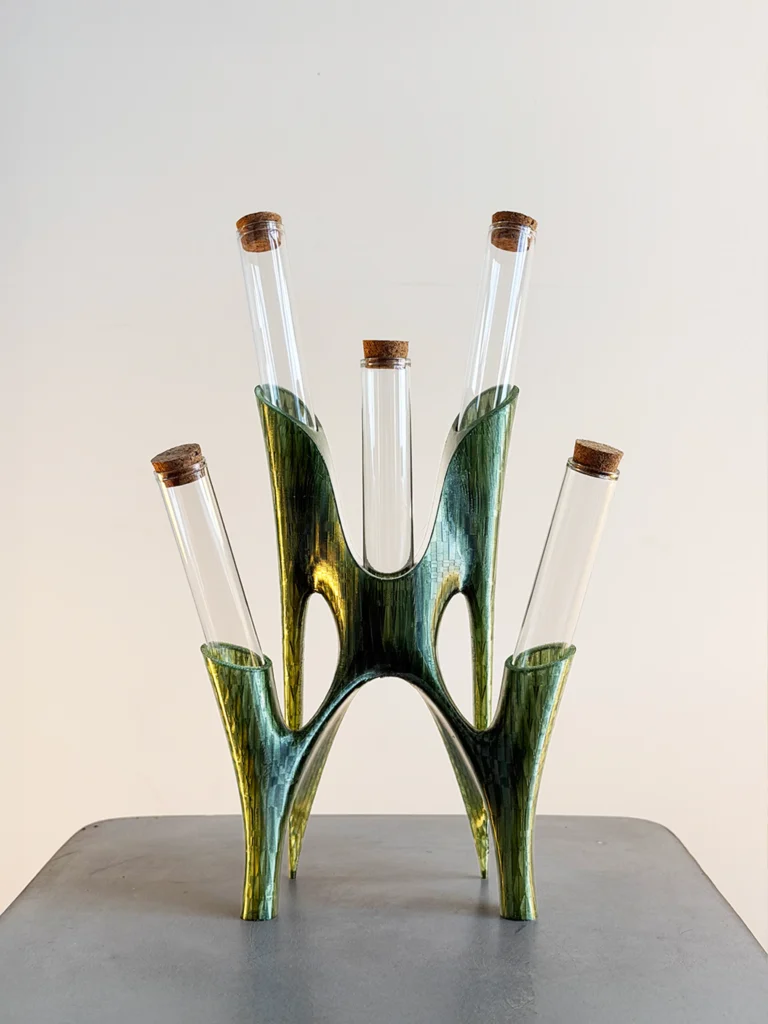
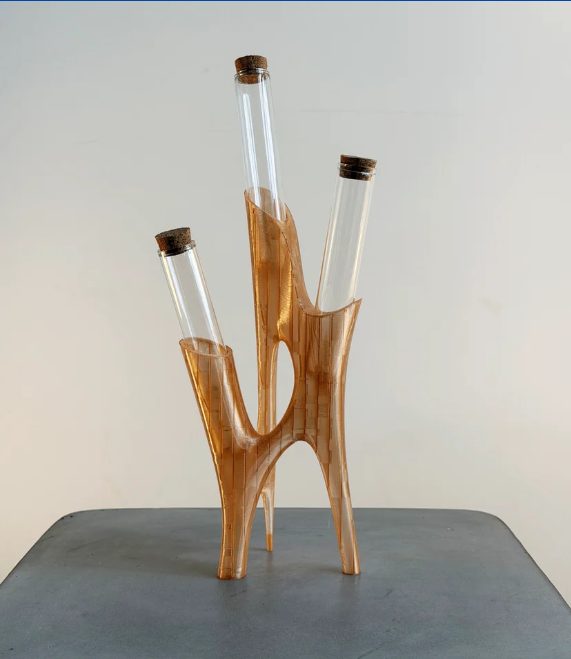
That evolution matters because the most convincing part of Stancati’s practice is no longer any single technology. It is the method behind it: take architecture’s understanding of space, combine it with fabrication, emerging technology, visual communication and a willingness to experiment, then decide which medium best serves the idea. Sunken Blimp’s own Almanac Vol. 1 makes that breadth explicit, collecting years of explorations across architecture, design, augmented reality and 3D printing rather than attempting to force the studio into one category.
For Stancati, the future of design therefore appears less concerned with choosing between physical and digital than with questioning why the two should remain separated in the first place. His work suggests a designer can move from an architectural environment to an AR portal, from a fabricated object to a branded world, and still be pursuing the same underlying objective: creating experiences that change how people see, move through and interact with the world around them.
The result is a practice that feels particularly suited to the present moment. As architecture, entertainment, fashion, technology and branding increasingly borrow tools from one another, Matheus Stancati is building his career in the spaces between them—and proving that some of contemporary design’s most interesting possibilities may exist precisely where the traditional labels stop working.