
There is an easy version of Audrey Raffy’s story: the eldest daughter of Pascal Raffy, owner of BOVET 1822, joins the family business and becomes part of its succession story. It is also the least interesting version. Look closer and Raffy represents something considerably more compelling: a lawyer with formal business training, an international upbringing and an increasingly influential role inside one of Switzerland’s most distinctive independent watchmaking houses.
Raffy did not arrive at BOVET simply carrying a famous surname. Before entering the Maison full-time, she studied business at the University of Miami and went on to Northwestern University’s Pritzker School of Law in Chicago, graduating in 2020. BOVET subsequently announced that she was joining its North American operations as Vice President and General Counsel, giving the then-new executive responsibility that extended well beyond ceremonial participation in the family company.
That legal education remains an important part of what separates Raffy from the more traditional image of a luxury-house heiress. Her responsibilities have included contracts, negotiations, due diligence and other legal matters, but her role quickly expanded. BOVET has described her work across spokesperson duties, digital and social media, presentations and partnerships, while Raffy has more recently discussed responsibilities spanning communications, marketing, international partners, special projects and sales-related initiatives.
Her perspective is equally shaped by geography.
Raffy was born in France, grew up partly in Valencia, Spain and Switzerland, and later spent approximately a decade in the United States. In a 2025 interview with Europa Star, she described herself as feeling as Spanish as she does Swiss and said she also considers herself American because of the years she spent there. She identified her father as French and her mother as French-Algerian, while also speaking about Lebanese heritage and the importance of family that came with it. Today, Dubai has become another important base in an already unusually international life.
That background matters because BOVET itself has always existed beyond a single geography. Founded in 1822, the Maison built its early reputation through highly decorated watches created for an international clientele, particularly in China. Two centuries later, Raffy operates in much the same borderless spirit, traveling extensively, working with retail partners, meeting collectors and representing the family and company across major markets.


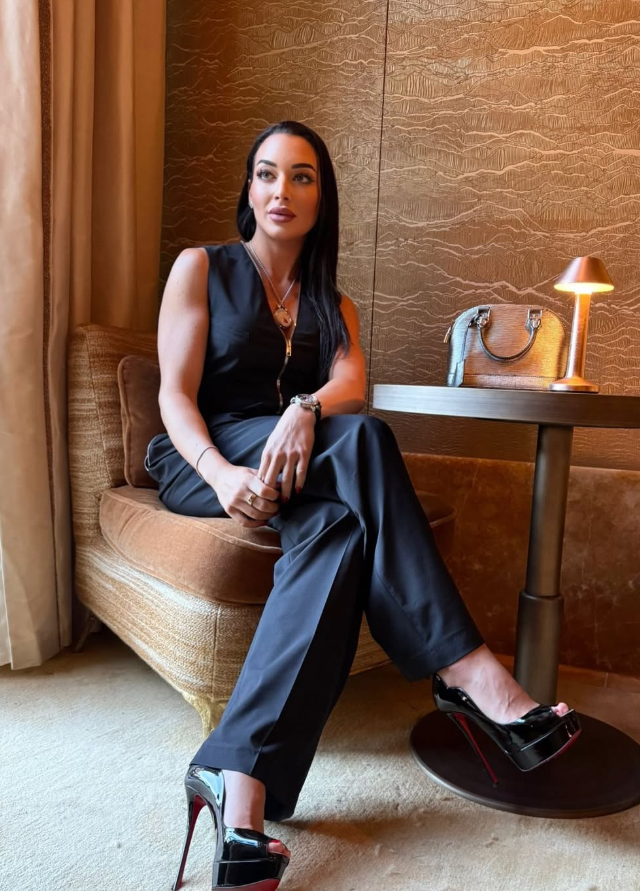

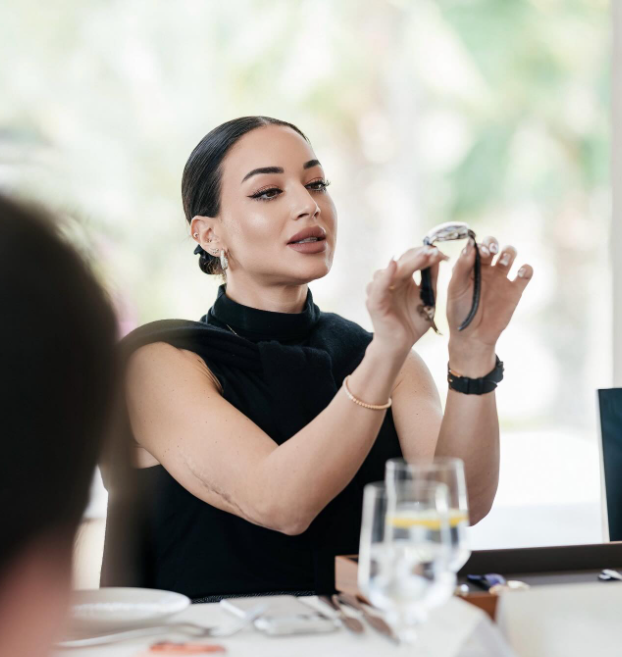

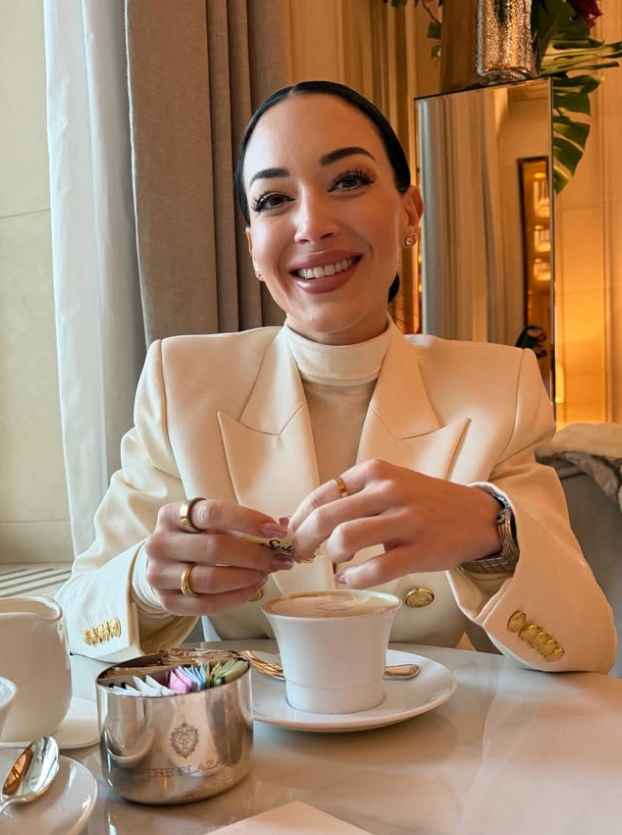
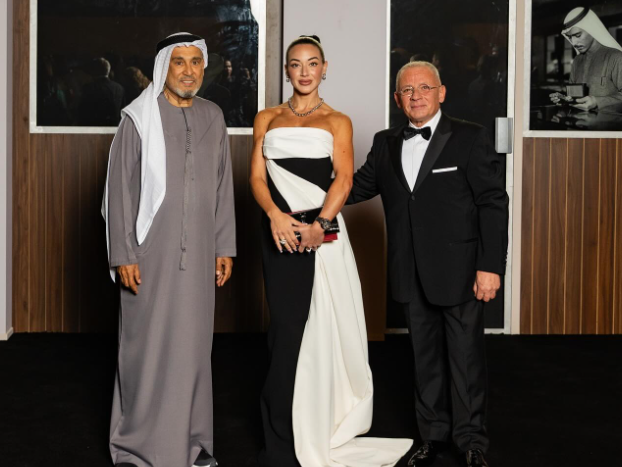
What makes her story particularly interesting, however, is that Raffy has repeatedly resisted the idea that being born into the family automatically qualified her for leadership. Speaking with WorldTempus about joining the business, she explained that having a law degree gave her a framework for determining where she could genuinely contribute. The emphasis was on adding value rather than occupying a position because one was available to her.
That distinction is important.
Luxury is full of dynasties. The difficult part is not inheriting history; it is proving that the next generation understands what deserves to be protected and what needs to evolve.
At BOVET, Raffy appears increasingly positioned between those two responsibilities. Her father, Pascal Raffy, has spent more than two decades reinforcing the Maison’s emphasis on traditional craftsmanship, hand decoration, complicated movements and vertical integration. Audrey’s perspective introduces another layer: contemporary communication, new audiences, modern colors, international partnerships and a stronger connection between an old-world manufacture and collectors who increasingly discover luxury through entirely different channels.
She has also been candid that she is not attempting to pretend to be the master watchmaker in the room. In interviews, Raffy has acknowledged that her position outside the traditional technical path can occasionally be an advantage. She can approach colors, materials, design ideas or communication without automatically being constrained by how watchmaking has historically done things, leaving BOVET’s artisans and technicians to determine how those ideas can be transformed into reality.
That combination—legal training, commercial awareness, cultural mobility and a willingness to learn the craft rather than claim mastery of it—is what makes Raffy one of the more interesting figures in the emerging generation of luxury leadership.
Her influence is also arriving in an industry where leadership has historically been overwhelmingly male. Raffy is not merely appearing in campaigns built around the family name. She has represented BOVET internationally, handled corporate legal responsibilities, worked directly with commercial partners and collectors, contributed to communications and marketing, and become one of the public faces responsible for explaining why a highly traditional independent watchmaker still matters in a radically different luxury landscape.
For Raffy, the future does not appear to require dismantling the past. It requires translating it.
That may ultimately be her greatest value to BOVET. The Maison already has history. It already has extraordinary artisans, a manufacture, a château and more than two centuries of watchmaking heritage. What the next generation must provide is relevance—and Raffy increasingly looks like one of the people tasked with carrying that story forward.
Not simply as Pascal Raffy’s daughter